


 English
 русский
 Français
 Español
 عربى
B flute packaging: Applications, Selection Criteria, and Practical Guidance
Oct 26, 2026
Content
B flute has a quiet reputation in our plant. It is not the thickest board we run through the corrugator, and it will never win a burst-strength argument against a double wall. But after more than two decades of making corrugated in Jiaxing and Zhangshu, we have learned that most packaging problems are not solved by adding millimetres. They are solved by putting the right board in the right place, and for a surprising share of jobs that board is B flute.
Here is what B flute packaging actually is, where it earns its keep, and how to decide whether it is the right call for your product.
What B Flute Actually Measures
B flute is a single-wall construction: two flat liners with one fluted medium sandwiched between them. Its profile runs roughly 3.2 mm, or about 1/8 inch. That is noticeably thinner than A flute at around 4.8 mm and a touch thinner than C flute at about 4.0 mm. What it lacks in height it makes up for in density, carrying somewhere in the region of 47 flutes per linear foot against roughly 33 for A flute and 39 for C flute.
Those extra flutes are the whole story. More flutes per foot means more arches to spread a load, more contact points between the medium and the liners, and a stiffer, flatter sheet coming off the stack. B flute also runs steadily on the corrugator, which is one reason it holds its caliper well across a long run. That matters more than it sounds. When you are printing a thousand identical boxes, you need every one of them to score, fold and stack the same way as the first.
Why B Flute Earns Its Place
Ask anyone who has spent a shift on a packing line which board they trust, and you rarely hear "the thickest one." You hear about boxes that fold cleanly, close without fighting back, and reach the customer looking much as they did when they left. B flute does all three.
The flutes sit close enough together that the board resists crushing and puncture better than its caliper suggests. Score lines stay tight, so a die-cut box folds along a crisp edge instead of a soft curve, which is exactly what retail packaging and hand-assembled packs need. And because the sheet is dense, it takes printing unusually well for a corrugated material.
The other advantage is less glamorous but often the deciding one: volume. A 3.2 mm wall lets you nest more boxes per pallet and more pallets per container. On parcels charged by dimensional weight rather than actual weight, a thinner wall can translate into a lower landed cost without touching the product inside.
How B Flute Compares to Other Common Flutes
Flute selection is rarely about one number. It is a trade between cushioning, compression strength, print surface and cube.
| Flute | Approx. caliper | Flutes per foot | Typical role |
|---|---|---|---|
| A | 4.8 mm (3/16 in) | ~33 | Cushioning for fragile or heavy goods |
| B | 3.2 mm (1/8 in) | ~47 | Retail boxes, mailers, fitments, printed packaging |
| C | 4.0 mm (5/32 in) | ~39 | General shipping, a middle ground |
| E | 1.6 mm (1/16 in) | ~90 | Small retail and shelf-ready packs |
| F | 0.8 mm (1/32 in) | ~125 | Fine retail and premium presentation |
Read that as a starting point rather than a verdict. A heavy item in a small carton can be perfectly safe in B flute, while a light but awkwardly shaped product may still want C flute for the extra cushioning depth.
Where B Flute Packaging Works Best
Across the product lines we build, a handful of applications come back again and again:
- Ecommerce and postal mailers. The board is rigid enough to protect a parcel in transit while keeping the outer dimensions tight, which helps on volumetric pricing.
- Retail and shelf-ready packaging. Crisp folds, square corners and a printable face make it a natural fit for display and counter packs.
- Inner fitments and dividers. B flute die-cuts and slots cleanly, so it suits inserts, partitions and tray-style components inside a larger shipper.
- Food service and bakery. Pizza boxes, confectionery cartons and takeaway packs benefit from the flat, dense surface and good grease-resistance options in the liner.
- Cosmetics and gift packaging. Where the box has to look considered on a shelf, B flute with a laminated or directly printed liner holds brand colour well.
- Subscription and kit boxes. Small runs of printed mailers with an unboxing moment fall neatly into the B flute range.
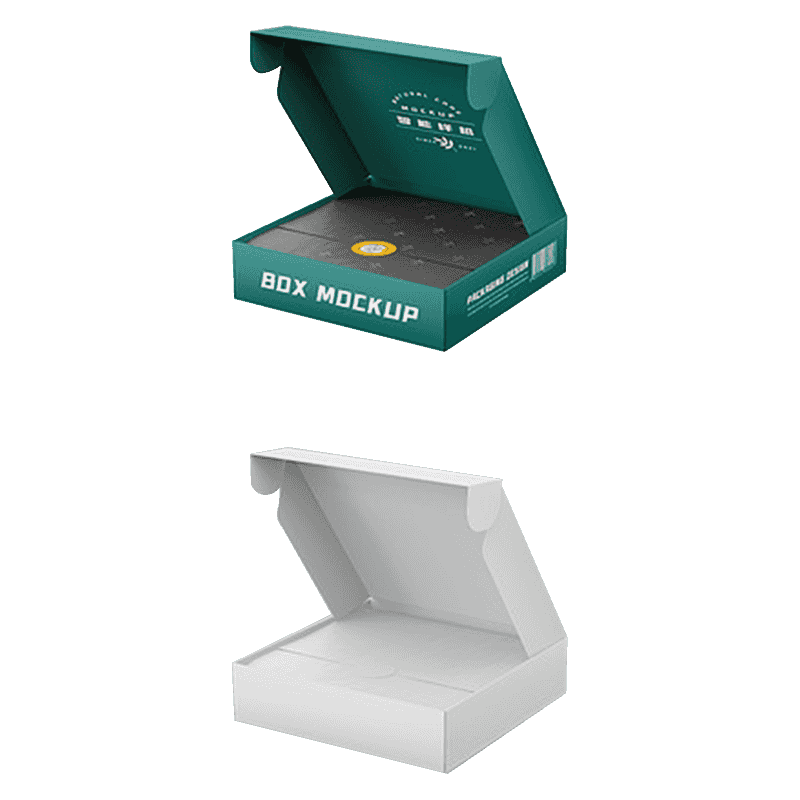 Custom Corrugated Mailer Boxes for Branded ShippingBranded shipping boxes with full-color exterior printing, custom base colors, and insert options, suited to the everyday mailer example discussed here.View Product →
Mailers are the clearest everyday example. A well-made B flute mailer holds its shape through a sorting hub, opens without tearing, and gives the customer a clean first impression rather than a dented one.
Print Quality and Shelf Presence
This is where B flute quietly outshines the thicker boards. Because the flutes are close together, the outer liner is supported at short intervals and stays flat under pressure. Flexo printing comes out sharper, and litho-laminated or digitally printed sheets sit without the washboarding you sometimes see on A flute. Solid brand colours and moderate halftones both hold up well.
The practical caveat is the liner. An uncoated kraft face will drink ink and mute fine detail, so if your artwork depends on tight registration or subtle gradients, talk to us about a coated or white-top liner before the plates are made. Small material changes are far cheaper than a reprint.
 Lavender Cloud Corrugated Cosmetic Gift BoxSoft lavender cosmetic gift box with large cloud and rainbow graphics, controlled ink coverage, and optional bronzing or hot stamping for brand accents.View Product →
Gift and beauty packs are where you see the difference most clearly, since the same sheet has to protect the product and carry the brand at the same time.
Choosing the Right B Flute Board for Your Product
Once you have settled on the flute profile, four decisions do most of the work.
Match the board grade to the load
Grade is about combined liner and medium weight, not flute height alone. A 32 ECT B flute box handles a lot of everyday freight; a heavier item or a long distribution chain may call for a stronger grade or a double wall that combines B with E. If you are unsure, our guide to corrugated board flute sizes walks through the measurements in more detail.
Check the flute direction
Flutes running vertically through a box wall carry stacking load; flutes running horizontally add cushioning but give up compression. It is a small detail on a drawing and a large one on a pallet.
Decide on liner and finish
Kraft for a natural look, white-top for bright print, recycled content if your brand asks for it, plus matte or gloss lamination if the pack is going on a shelf rather than into a warehouse rack.
Confirm the box style
RSC, reverse tuck, mailer, tray and sleeve all behave differently in B flute. The material is forgiving, but the die line still has to respect it.
12-Size E-commerce Cardboard Shipping BoxesCorrugated shipping boxes in 12 sizes for small accessories to large equipment, with quick assembly and logo printing for online stores.View Product →
If you ship a small range of products and would rather not start from a blank sheet, working from a set of stock sizes is often the fastest route, with printing added on top.
Mistakes We See Often
- Assuming thin means weak. B flute is thinner than C, not flimsier. Density does work that caliper alone cannot.
- Over-specifying. Adding a wall "just in case" raises material cost, freight cost and storage footprint for a problem that may not exist.
- Ignoring dimensional weight. A few millimetres of extra wall across thousands of parcels adds up quickly.
- Choosing artwork that fights the board. Heavy ink coverage on bare kraft will look uneven no matter how good the plates are.
- Sampling on a different sheet. A press proof on a heavier board tells you very little about how the production run will fold.
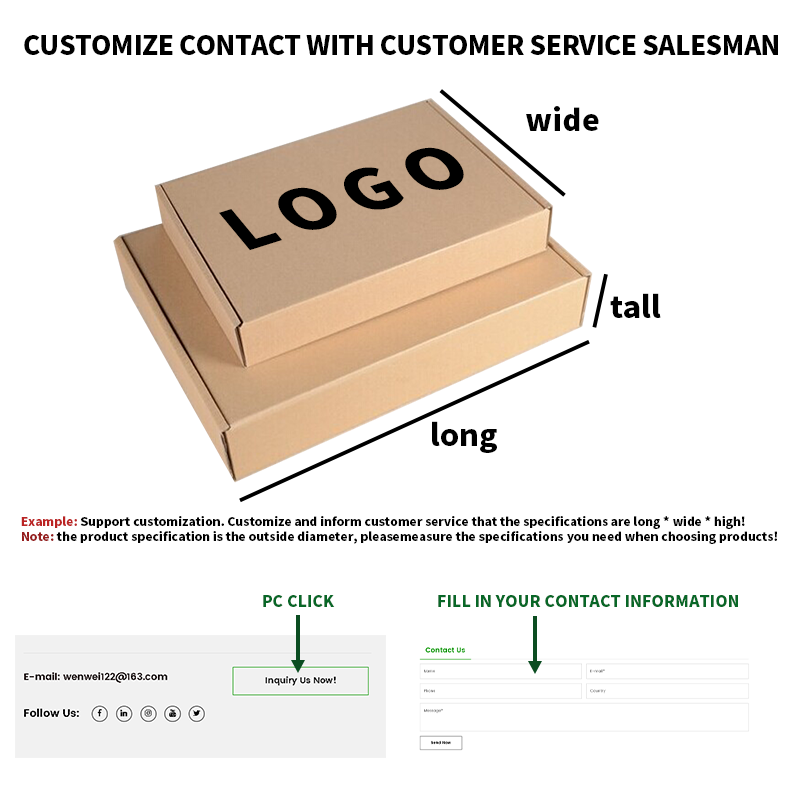
None of these are difficult to avoid once they are named, and most are settled in a single conversation before the first sample is cut. When you are ready to talk through a spec, our customization process covers artwork, tooling and sample approval step by step.
A Practical Closing Note
B flute is the board we reach for when a pack has to protect a product, print well enough to represent a brand, and still make economic sense on a pallet. It is not the answer to every brief, and we will say so when it is not. But if your product fits comfortably in a carton, travels through ordinary parcel networks, and needs to look presentable when it lands, there is a strong chance B flute is the most efficient place to start.
Send us the product dimensions, the weight, and how it will be shipped. We will tell you honestly which flute we would put it in, and why.

- Contact Us
- Phone:+86-138 1869 0662
- TEL:+86-573 8570 0965
- Email:[email protected]
[email protected] - Address:No. 269, Jinsui Road, Xincang Town, Jiaxing City, Zhejiang Province, China
- Get in Touch

