


 English
  русский
  Français
  Español
  عربى
عربى Corrugated Cardboard Pet Products Packaging Boxes Manufacturer
-
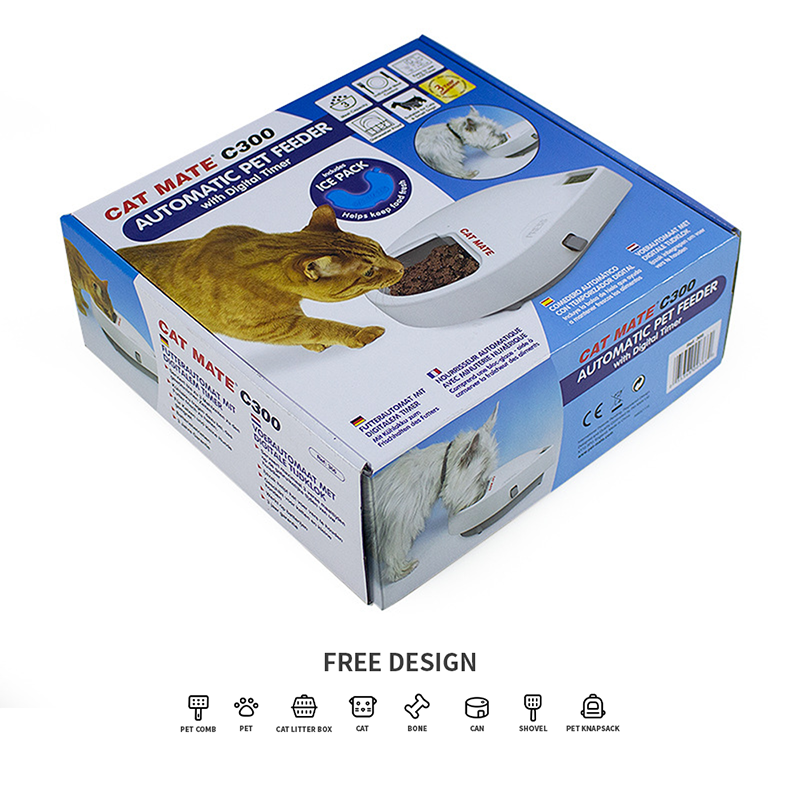
Corrugated Pet Food Packaging Boxes
Pet food packaging has to do more than look good on a shelf — kibble and treats need protection fro... -
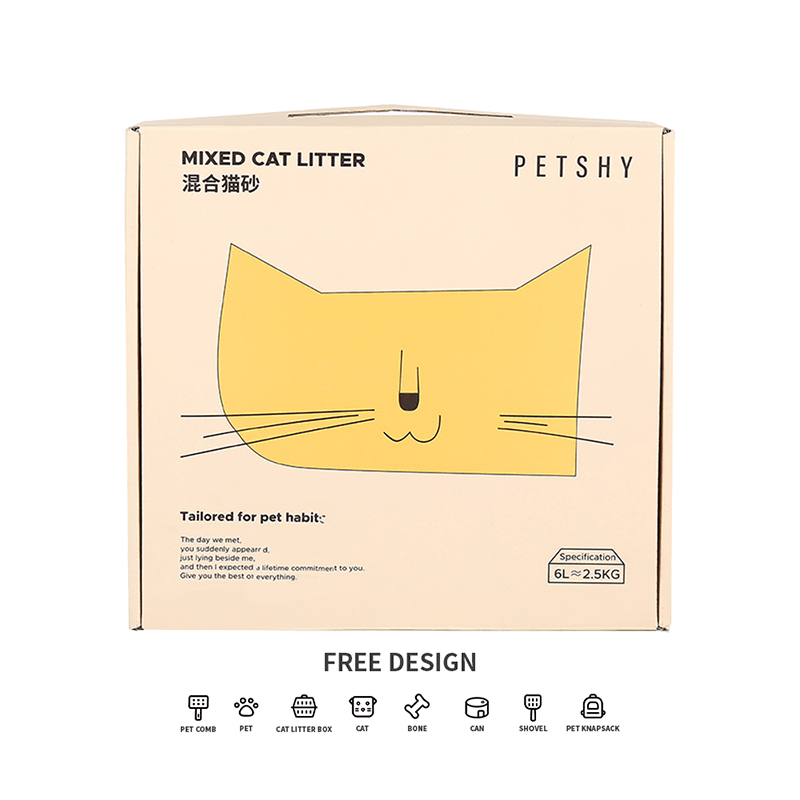
Corrugated Cat Litter Packaging Boxes
Cat litter is heavy and prone to leaking if the packaging isn't built for it — a typical bag can ru... -
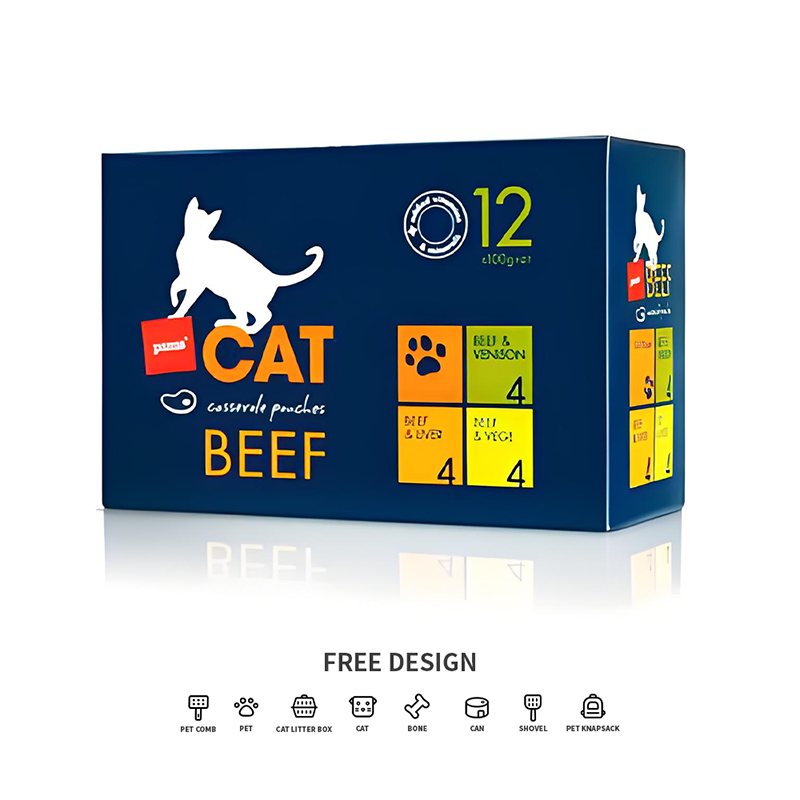
Corrugated Pet Tool Packaging Boxes
Pet tools and accessories cover a wide range of shapes and sizes — grooming brushes, nail clippers,...
Our corrugated pet products packaging boxes are tailored for your pet goods, featuring adorable cat and dog designs and stylish aesthetics that add appeal to your products. These boxes not only protect pet food and supplies but also bring an element of surprise to every gift. Whether it's cat food, dog treats, pet toys, or other pet essentials, our boxes provide safe and reliable packaging solutions. Plus, we offer customization to create unique packaging that aligns with your brand and specific needs. Customization is available, and product images are for reference only.

About Us
Zhejiang Wenchen Packaging Technology Co., Ltd. was established on December 24, 2004. As Cardboard Pet Products Packaging Boxes Manufacturers in China, Corrugated Pet Products Packaging Boxes Compnay, the company integrates R&D, manufacturing, export and domestic sales. It mainly deals in color boxes, corrugated boxes, corrugated cardboard, industrial cartons, Taobao Tmall and various e-commerce platforms postal express cartons, various specifications of customized printing and other carton products. With 15 years of carton production capacity, the company has rich product experience. The production of cardboard and carton is completed by the company, which guarantees the quality of the product from the source, focuses on automation and large-scale production, and responds quickly to customer requirements; vertical integration can bring better costs to customers.
The company covers an area of 61,111 square meters, with a plant area of 35,000 square meters, an annual output of 150 million square meters of cardboard, and a monthly output of 80 million cartons. Offer Custom Printed Corrugated Pet Products Packaging Boxes. In 2018, the company's annual output value was 260 million yuan.
At present, the company's annual production capacity of paper containers is 300 million square meters, with a fully automatic 2500 door width high-speed cardboard production line, a fully automatic 5-color carton linkage production line, a fully automatic digital printer, 8 three-color printing machines, 2 fully automatic four-color printing machines, 3 1500 die-cutting machines, 1 1450 fully automatic die-cutting machine and other production equipment. As Custom Cardboard Pet Products Packaging Boxes Compnay, the total investment is about 200 million, and the annual sales are about 500 million.
The company has a sound organizational structure and adheres to the principle of "people-oriented, integrity first, customer first, quality first". Friends from all walks of life are welcome to visit, guide and discuss business.
News
-
Industry News 2026-09-18
Ask any beauty founder what keeps them awake at night, and you will usually hear two answers: "Will it stand out on the shelf?" and "Will it arrive in one piece?" Packaging and brand design for cosme...
View More -
Industry News 2026-09-11
Every week a customer sends us two printed sheets and asks the same question: which one should we run? One is wrapped in a smooth matte film, the other in a high-gloss one. Both look fine on a desk u...
View More -
Industry News 2026-09-04
The First Rule of FDA Food Packaging Corrugated food packaging will never come with an FDA seal. If you are preparing to ship food in the United States, the practical question is not whether the prin...
View More -
Industry News 2026-08-28
Two quotes land on your desk for what looks like the same brown shipping box. One is built on 200# burst board, the other on 32 ECT, and the prices differ by a double-digit percentage. Both suppliers...
View More
Contact us now
Corrugated Pet Products Packaging Boxes
Grease and Moisture Are the Real Enemy of Pet Food Packaging
Kibble and treats release oil over time, and that oil migrates straight into untreated corrugated board — softening the flute and eventually causing the box to sag or split at the seams. A wax or water-based coating on the inner liner slows this migration significantly, which matters most for boxes that sit in a warehouse or on a shelf for weeks rather than being shipped and opened right away. We apply grease-resistant liner treatments as standard on pet food cartons, since it's a detail that's easy to skip and expensive to discover after a batch has already shipped.
Board Strength for Bulk Kibble and Litter, Not Just Treats
Pet packaging spans a wide weight range — a box of small treats and a 15kg bag of litter or kibble have almost nothing in common structurally. Matching flute and wall construction to the actual product weight avoids both bulging bottoms and unnecessary material cost:
- E/B flute single wall — treats, toys, grooming items, small accessories
- C flute single wall — mid-size kibble bags, standard retail cartons
- Double wall (B/C) — bulk litter, large-format kibble, warehouse-stacked pallets
Ventilation Without Losing Structural Strength
Anything packaged with airflow in mind — chews, dried treats, or carrier-style boxes used for short pet transport — usually needs cut-out ventilation holes, and every hole removed is strength taken out of that panel. The common fix is to keep vent holes small and evenly distributed rather than one large cutout, and to reinforce the panel edges around them so the compression rating doesn't drop as much as the open area suggests. This is worth flagging at the design stage rather than adding holes to an already-finalized box structure.
Designing Around Chewing and Scratching
For retail packaging that pets can reach directly — toy boxes on a low shelf, or treat cartons left out at home — a few practical details reduce damage and mess:
- Fold-locking closures instead of exposed flaps, so there's less loose edge to pull at
- Rounded corners on any panel likely to sit at pet height
- Heavier board weight on the front-facing panel, where paws and teeth make first contact
Sizing for Pet Store Shelves and Wholesale Pallets
Pet retail packaging usually has to satisfy two size constraints at once: it needs to fit a standard shelf depth at the store, and it needs to nest efficiently on a pallet for wholesale delivery. Boxes sized without checking both tend to either waste shelf-facing space or leave awkward gaps during palletizing that reduce how much stock fits per shipment. If you already know your target shelf depth and pallet footprint, sharing both lets us size the carton to satisfy both constraints from the same die line rather than compromising on one.

- Contact Us
- Phone:+86-138 1869 0662
- TEL:+86-573 8570 0965
- Email:[email protected]
[email protected] - Address:No. 269, Jinsui Road, Xincang Town, Jiaxing City, Zhejiang Province, China
- Get in Touch

