


 English
 русский
 Français
 Español
 عربى
Auto bottom box: Applications, Selection Criteria, and Practical Guidance
Oct 23, 2026
Content
- 1 What Exactly Is an Auto Bottom Box?
- 2 How the Auto Bottom Compares With Other Bases
- 3 Why Packers Ask for the Pop-Up Bottom
- 4 E-commerce and Subscription Shipping
- 5 Food, Takeaway and Bakery Work
- 6 Beauty, Gifting and Retail Presentation
- 7 Choosing Board Grade and Flute
- 8 Size and Artwork Details That Catch People Out
- 9 A Checklist Before You Place the Order
- 10 Talking to the People Who Make the Board
Every packing bench has its own rhythm, and nothing interrupts that rhythm faster than a carton that will not stay square while you fold the flaps. That is the small, practical problem the auto bottom box was designed to solve. We have been making corrugated board and boxes since 2004, and it is still one of the details our customers bring up most often when they talk about a box that simply works.
What Exactly Is an Auto Bottom Box?
An auto bottom box is a corrugated or folding carton whose base arrives pre-glued. It ships flat like any ordinary blank, but when you press two opposite corners together, the bottom unfolds and locks itself into a flat, double-thickness floor. Nobody reaches for a tape gun, and nobody has to remember a folding sequence.
The name changes depending on who you talk to. Printers often call it a crash-lock bottom, e-commerce sellers call it a pop-up bottom, and buyers in food service tend to call it a self-locking base. All three describe the same construction: a die-cut blank with the side seam glued and two small diagonal glue tabs connecting the bottom flaps. Those tabs are the whole trick. When the box opens, they pull the four bottom panels into an overlapping position that holds under load.
How the Auto Bottom Compares With Other Bases
Choosing a base style is really a question about labour, weight and how the parcel will be handled. The table below puts the most common options side by side.
| Bottom style | How it closes | Assembly at the bench | Tape at the base | Typical use |
|---|---|---|---|---|
| Auto bottom (crash-lock) | Pre-glued diagonal tabs pull the flaps into place | Push two corners, roughly one to two seconds | None | Mailers, subscription boxes, pizza, cosmetics |
| RSC (regular slotted container) | Two outer flaps meet at the centre line | Fold, fill, then seal both ends | Yes, both ends | General shipping and industrial loads |
| Snap-lock or 1-2-3 bottom | Three panels interlock in sequence | Fold three panels in order | None | Bakery, deli and some retail cartons |
| Roll-end tuck | End flaps roll in and tuck | Fold and tuck by hand | None | Small, lightweight retail cartons |
Why Packers Ask for the Pop-Up Bottom
The obvious benefit is speed. A taped RSC takes perhaps twenty to thirty seconds at the bench; a pop-up bottom takes two. Multiply that across a busy despatch day and the difference shows up as real hours, not a rounding error.
There are quieter advantages too. The base is always the same shape, so void fill, labelling and case packing stay consistent from the first parcel to the last. There is no tape ridge on the inside floor, which means the product sits flat and the unboxing looks tidy. Boxes ship and store flat, so a small seller can keep a few hundred units on a shelf without giving up warehouse space.
We are also honest about the trade-offs, because they matter when you are costing a project. An auto bottom blank uses a little more board than a comparable RSC, and it needs a die-cutting tool, so very small runs are rarely economic. The folded base also takes up a few millimetres of internal depth, which has to be planned for. And a single-wall auto bottom carrying fifteen or twenty kilos will sag unless the board grade is specified properly.
E-commerce and Subscription Shipping
For online sellers, the auto bottom is close to ideal. Orders are packed one at a time, often by people who are not packaging specialists, and a base that assembles in one motion removes the most common cause of a lopsided parcel. Subscription boxes benefit for the same reason, plus the clean interior floor gives the unboxing a finished feel that a taped seam never quite matches.
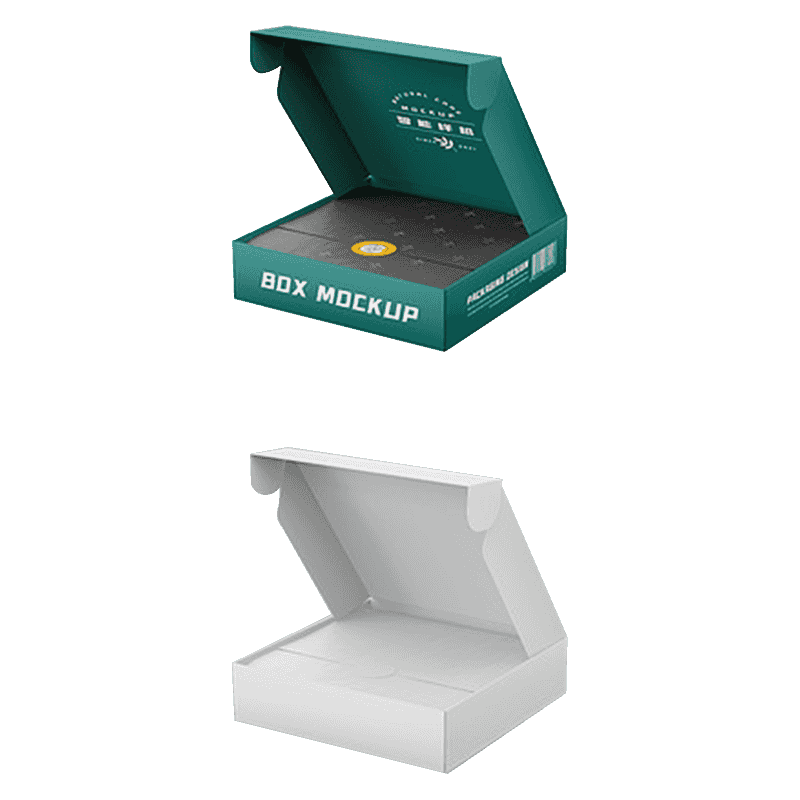 Custom Corrugated Mailer Boxes for BrandsCustom mailer boxes with full-color printing, interior options and inserts suit online sellers and subscription boxes seeking a finished unboxing.View Product →
Where a brand needs its own dimensions, printing or an insert, the same construction can be produced to a bespoke specification.
Food, Takeaway and Bakery Work
The pizza box is probably the most familiar auto bottom in the world. It pops open with a flick of the wrist, holds its shape on a counter, and closes again without tape. The same logic applies to bakery cartons, coffee boxes, meal kits and takeaway packaging where speed at the counter matters as much as protection in transit. For these applications, food-grade liners and grease-resistant coatings can be specified alongside the base style, and venting or stacking strength can be tuned in the same conversation.
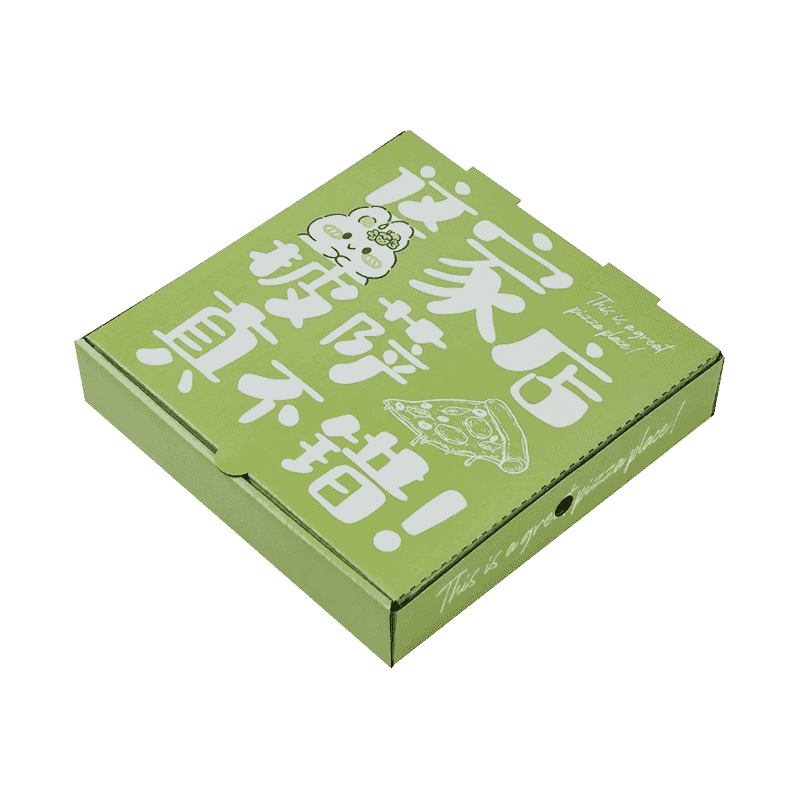 Custom Corrugated Pizza Takeout Boxes with LogoCustom-branded pizza boxes in sizes from personal to family, with full-color printing for restaurants and delivery services.View Product →
Beauty, Gifting and Retail Presentation
Cosmetics and gift packaging borrow the auto bottom for different reasons: it looks considered. A printed mailer that opens into a rigid, square tray feels like a product, not a shipping container. E-flute and B-flute boards take fine print well, and matte lamination or spot finishes sit comfortably on a die-cut blank of this kind. The main caution is weight. Glass bottles and heavy jar sets need a reinforced base or a double-wall construction rather than a single-wall crash-lock.
 Blush Dot Self-Care Mailer BoxA pink gradient-dot corrugated mailer with contrast interior and premium logo finishes, suited to beauty and self-care subscription kits.View Product →
Choosing Board Grade and Flute
The base style gets the box open; the board grade keeps it closed. As a general guide from our own production floor:
- E-flute, around 1.5 mm — fine print and crisp folds, suited to cosmetics, jewellery and light retail goods.
- B-flute, around 3 mm — a good middle ground for printed mailers and gift boxes with moderate loads.
- C-flute, around 4 mm — the workhorse for e-commerce and general shipping, with useful cushioning.
- BC double wall, around 7 mm — for heavier products, long transit or stacking in a warehouse.
Board stiffness matters more than thickness here. A base that locks crisply in a firm C-flute can feel floppy in a thin sheet, so the flute, the edge crush grade and the size of the panel all need to be chosen together rather than one at a time.
Size and Artwork Details That Catch People Out
Always specify internal dimensions, measured with the product and its cushioning already in place, and remember that the locked base removes a few millimetres of usable depth. Board caliper also shifts the external size, which matters if the box has to fit a shelf, a locker or an automated sorter.
On the artwork side, the blank has a specific geometry. Glue tabs, score lines and the diagonal base panels will distort or hide whatever is printed over them, so logos, barcodes and legal text should sit well inside the quiet areas. Sending a packaging dieline to your designer before the first proof saves the cost of a second print run later.
A Checklist Before You Place the Order
- Confirm internal dimensions using the packed product, not the bare item.
- State the loaded weight and how long the boxes will be stacked.
- Choose flute and board grade against that weight, not against habit.
- Check the product footprint clears the folded base comfortably.
- Keep barcodes, logos and legal copy away from glue tabs and scores.
- Request a physical sample and run a drop or compression test before scaling up.
- Ask how many blanks ship per carton and per pallet, so your storage space is ready.
Talking to the People Who Make the Board
Zhejiang Wenchen Packaging Technology has been producing corrugated board and boxes since 2004, from two plants in Jiaxing, Zhejiang and Zhangshu, Jiangxi. Because we make the board and convert the boxes under the same roof, the flute, the liner and the base geometry are chosen as one decision rather than three. Our site sits about two kilometres from a G15 motorway exit, which keeps delivery schedules predictable for customers across the Yangtze River Delta and further inland.
If you are weighing up an auto bottom against an RSC, send us the product dimensions, the weight and a reference photo. We will come back with a board recommendation, a base style and a sample you can actually pack, which is always a better conversation than a spec sheet. More on bespoke custom printed corrugated boxes is available if you would like to see how the process runs from artwork to pallet.

- Contact Us
- Phone:+86-138 1869 0662
- TEL:+86-573 8570 0965
- Email:[email protected]
[email protected] - Address:No. 269, Jinsui Road, Xincang Town, Jiaxing City, Zhejiang Province, China
- Get in Touch

