


 English
  русский
  Français
  Español
  عربى
عربى Corrugated Cardboard Smart Devices Packaging Boxes Manufacturer
-
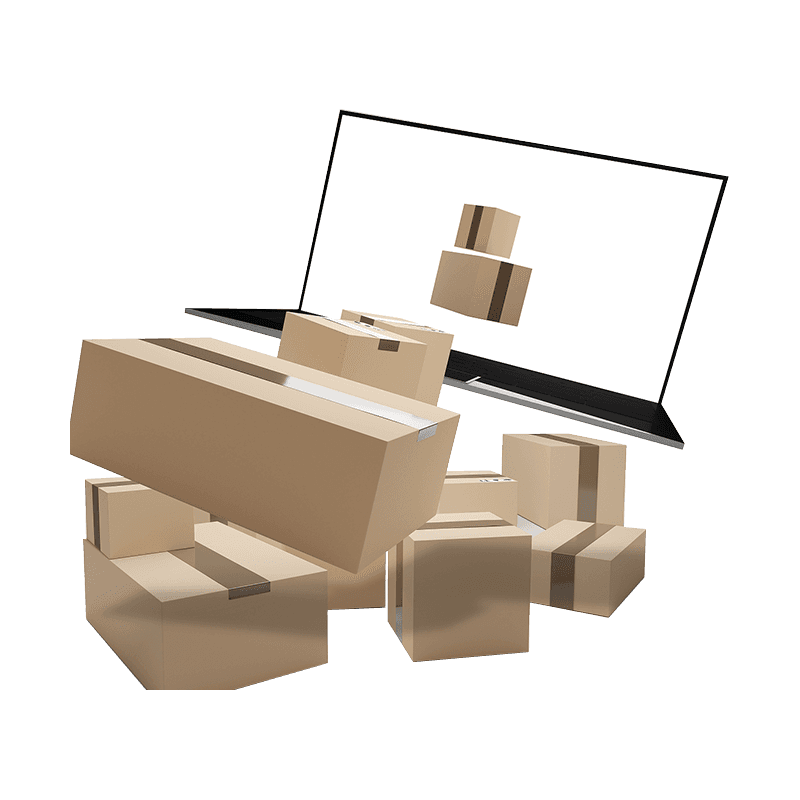
Corrugated Laptop Packaging Boxes
Laptops are dense, edge-sensitive, and expensive to replace if they arrive damaged — a box built fo... -
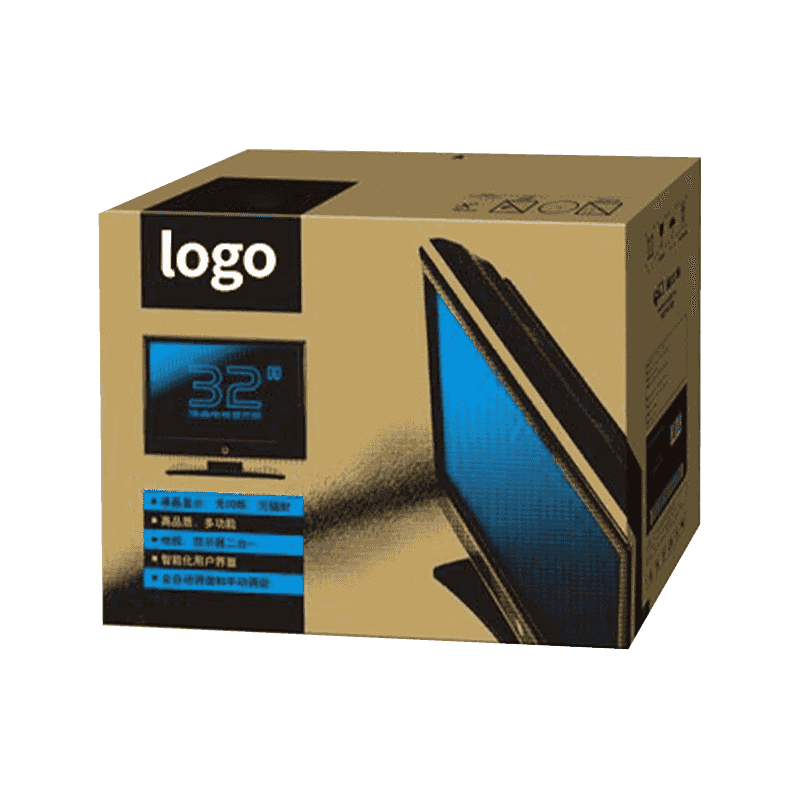
Corrugated TV Packaging Boxes
Protect your valuable TVs during transportation and storage with our Corrugated TV Packaging Boxes. ...
Our corrugated smart device packaging boxes are custom-designed for various electronics, ranging from smartphones and tablets to televisions and other smart gadgets. Each box is made with high-quality materials to ensure your products are protected during shipping, no matter the size or fragility. We offer a variety of design styles, including minimalist white boxes for tablets, sleek and classic packaging for smartphones, and robust, custom solutions for larger items like TVs. Each box is thoughtfully crafted to elevate your brand image and deliver your products in the best possible condition. From protective inserts to exterior prints and unboxing experience, we focus on every detail to ensure customers feel the quality and care from the moment they open their package. Customization is available, and product images are for reference only.
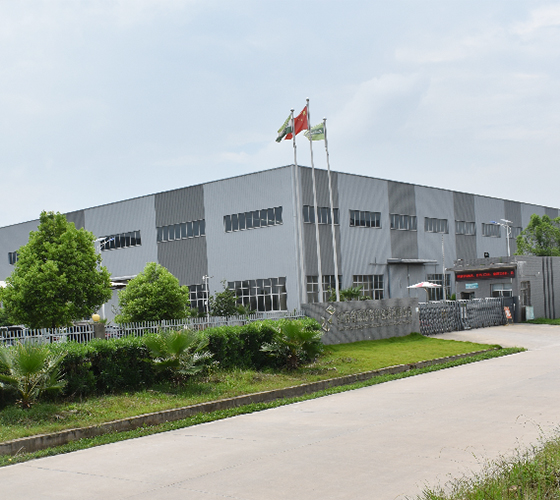
About Us
Zhejiang Wenchen Packaging Technology Co., Ltd. was established on December 24, 2004. As Cardboard Smart Devices Packaging Boxes Manufacturers in China, Corrugated Smart Devices Packaging Boxes Compnay, the company integrates R&D, manufacturing, export and domestic sales. It mainly deals in color boxes, corrugated boxes, corrugated cardboard, industrial cartons, Taobao Tmall and various e-commerce platforms postal express cartons, various specifications of customized printing and other carton products. With 15 years of carton production capacity, the company has rich product experience. The production of cardboard and carton is completed by the company, which guarantees the quality of the product from the source, focuses on automation and large-scale production, and responds quickly to customer requirements; vertical integration can bring better costs to customers.
The company covers an area of 61,111 square meters, with a plant area of 35,000 square meters, an annual output of 150 million square meters of cardboard, and a monthly output of 80 million cartons. Offer Custom Printed Corrugated Smart Devices Packaging Boxes. In 2018, the company's annual output value was 260 million yuan.
At present, the company's annual production capacity of paper containers is 300 million square meters, with a fully automatic 2500 door width high-speed cardboard production line, a fully automatic 5-color carton linkage production line, a fully automatic digital printer, 8 three-color printing machines, 2 fully automatic four-color printing machines, 3 1500 die-cutting machines, 1 1450 fully automatic die-cutting machine and other production equipment. As Custom Cardboard Smart Devices Packaging Boxes Compnay, the total investment is about 200 million, and the annual sales are about 500 million.
The company has a sound organizational structure and adheres to the principle of "people-oriented, integrity first, customer first, quality first". Friends from all walks of life are welcome to visit, guide and discuss business.
News
-
Industry News 2026-09-11
Every week a customer sends us two printed sheets and asks the same question: which one should we run? One is wrapped in a smooth matte film, the other in a high-gloss one. Both look fine on a desk u...
View More -
Industry News 2026-09-04
The First Rule of FDA Food Packaging Corrugated food packaging will never come with an FDA seal. If you are preparing to ship food in the United States, the practical question is not whether the prin...
View More -
Industry News 2026-08-28
Two quotes land on your desk for what looks like the same brown shipping box. One is built on 200# burst board, the other on 32 ECT, and the prices differ by a double-digit percentage. Both suppliers...
View More -
Industry News 2026-08-19
When a stack of hardcover books toppled a lightweight display in the middle of a busy sales event, the store owner did what most retailers eventually do: asked for something stronger. The fix was a c...
View More
Contact us now
Corrugated Smart Devices Packaging Boxes
Cushioning Against Shock and Vibration, Not Just Drops
Most damage to smart devices in transit doesn't come from one dramatic drop — it comes from sustained vibration during truck and air transport, which gradually works a loose device against the inside wall of a box until a hinge, screen edge, or solder joint gives way. A snug-fit corrugated insert that holds the device firmly in place does more for real-world protection than extra empty cushioning space around a loosely floating unit.
Insert Design for Devices and Their Accessories
Smart device boxes rarely hold just one item — chargers, cables, manuals, and small accessories all need their own compartment so they don't shift against the main unit. A few approaches we commonly build into inserts:
- Die-cut corrugated trays with a recessed cavity matched to the device's exact outline
- Separate sub-compartments for cables and chargers so they can't press against the screen
- A raised lip around the device cavity that keeps the lid from making direct contact
Static-Sensitive Products Need a Different Liner
Circuit boards, sensors, and bare device components exposed to a static charge can suffer damage that isn't visible until the product fails later — which makes it a costly problem to trace back to packaging. For anything with exposed electronics, an anti-static or ESD-safe interior coating on the corrugated liner is worth specifying up front rather than treated as an optional add-on. We can produce anti-static liner options on request for smart device cartons where this applies.
Rigidity for Retail Shelves and Stacked Storage
Smart device packaging often does double duty — it's a shipping carton in the warehouse and a retail display box on the shelf. That means the structure has to stay square and resist bulging even when several units are stacked, since a visibly warped box undermines the premium feel a tech product is usually going for. Choosing a slightly heavier board weight than the minimum needed for shipping alone is a common trade-off buyers make specifically to keep shelf presentation intact.
Sizing Tightly Enough to Prevent Movement, Loosely Enough to Assemble Fast
There's a narrow tolerance window for device packaging: too tight and the box is slow to pack and hard to close without forcing it; too loose and the device can shift inside its own insert. Getting this right usually takes one physical sample round rather than relying on drawings alone, which is why we recommend a sample check before committing to a full production run on any new device shape.

- Contact Us
- Phone:+86-138 1869 0662
- TEL:+86-573 8570 0965
- Email:[email protected]
[email protected] - Address:No. 269, Jinsui Road, Xincang Town, Jiaxing City, Zhejiang Province, China
- Get in Touch

