


 English
  русский
  Français
  Español
  عربى
عربى 3D Packaging Design Guide: From Digital Mockup to Manufacturable Corrugated Box
Oct 10, 2026
Content
- 1 Why 3D Packaging Design Earns Its Place Early
- 2 What 3D Packaging Design Actually Covers
- 3 From Screen to Sample: How Our Design Reviews Run
- 4 Digital Mockup or Physical Sample?
- 5 Design Details That Decide Whether the Box Survives
- 6 Smaller Brands: Getting 3D Design Without a Studio
- 7 A Short Pre-Production Checklist
Most packaging problems are cheap to fix on a screen and expensive to fix on a pallet. That is the simplest argument for 3D packaging design: it lets a brand, a designer and a box maker look at the same object before a single sheet of board is cut, folded or printed. We have been converting corrugated board since 2004, and because we make our own board as well as our own boxes, we sit on both sides of that conversation, between the artwork file that arrives from a design team and the folding machine that has to run it at production speed.
What follows is not a software review. It is a practical look at how 3D packaging design fits into real corrugated production, what a good model can and cannot tell you, and how to move from a promising render to a box that arrives intact.
Why 3D Packaging Design Earns Its Place Early
Nobody enjoys discovering that a lid sits four millimetres short, or that the brand name lands exactly on a crease, after ten thousand boxes have been glued. 3D packaging design moves those discoveries to the cheapest possible moment. A well-built model lets you rotate the pack, open the flaps, check the product inside and view every panel from the angle a customer will see.
- Fit: the model shows whether the product truly sits inside, with the clearance and cushioning the shipping method demands.
- Artwork: logos, text and patterns can be checked against folds, glue tabs and panel edges instead of being guessed from a flat layout.
- Decisions: a buyer, a marketing manager and a print operator can all react to the same render rather than interpreting one technical drawing differently.
The earlier a problem appears, the less it costs. A wrong dimension corrected in a 3D file takes minutes; the same correction after die-cutting takes a new die, new board and new production time.
What 3D Packaging Design Actually Covers
People use the phrase to describe everything from a quick online mockup tool to a full structural engineering file. In production, three layers matter.
Structure first: the dieline
A dieline is the flat cutting and creasing pattern that becomes the box. When the folds are placed correctly, the pack assembles square and stacks predictably; when they are not, no amount of beautiful artwork rescues it. If the term is new to you, our plain-language guide to what a dieline is explains how cut lines, crease lines and bleed work together.
Then the surface: artwork in three dimensions
Mapping artwork onto a model exposes what a flat layout hides: a pattern that looks centred on screen but drifts across the front panel, a logo that disappears around a corner, or a colour block that lands half on the lid and half on the body.
Then the material: thickness changes everything
Corrugated board is not a zero-thickness surface. A single-wall B-flute and a double-wall board behave very differently, and the internal dimensions of a finished box are always smaller than the flat blank suggests. Any model worth trusting is built around a real board grade, not a default setting.
From Screen to Sample: How Our Design Reviews Run
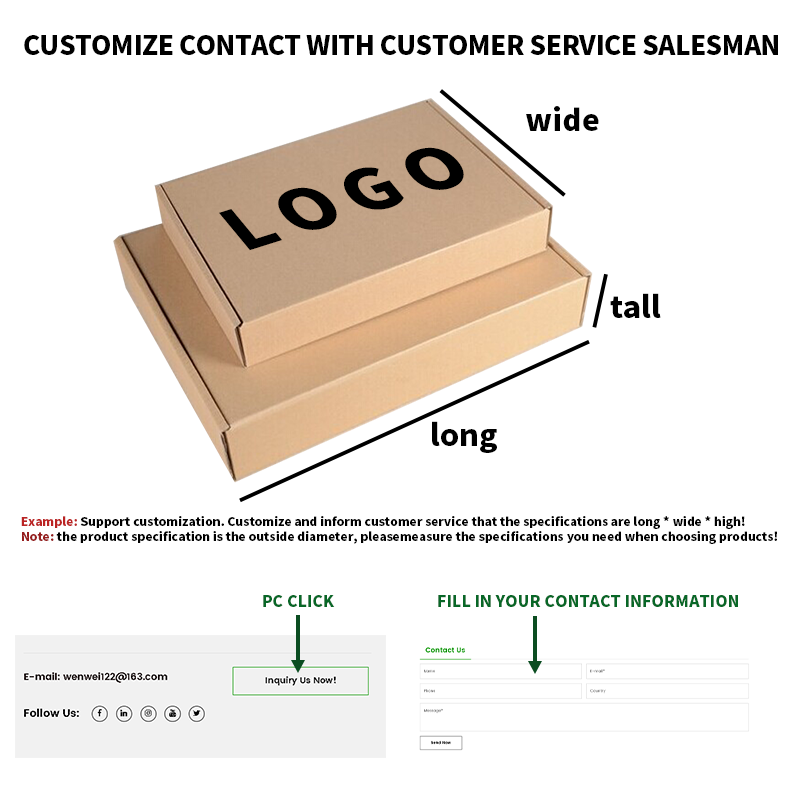
Because we manufacture rather than only broker, our design review stays tied to what our machines can actually run. The options we offer are described on our customization page; the sequence below is how most projects move.
- Brief and constraints. Product size and weight, shipping method, stacking height, storage conditions, sales channel, and print expectations.
- Structural options. Two or three realistic box styles, each with a suggested flute and board grade.
- 3D model. The chosen structure is modelled with artwork mapped onto the panels so proportion, closure and overall presence can be judged.
- Samples. A white sample first, to test fit and assembly, then a printed sample to check colour, finish and lamination.
- Approval. Sign-off on the sample, board grade, print specification and packing method.
- Production. Dies, printing, die-cutting, gluing and delivery, scheduled from whichever of our two plants serves the destination best.
E-commerce mailers are a good example of where the model earns its keep. A 3D view shows whether a tear strip clears the artwork, whether a return flap interferes with the contents, and how the pack will look on a doorstep after a few hours in transit.
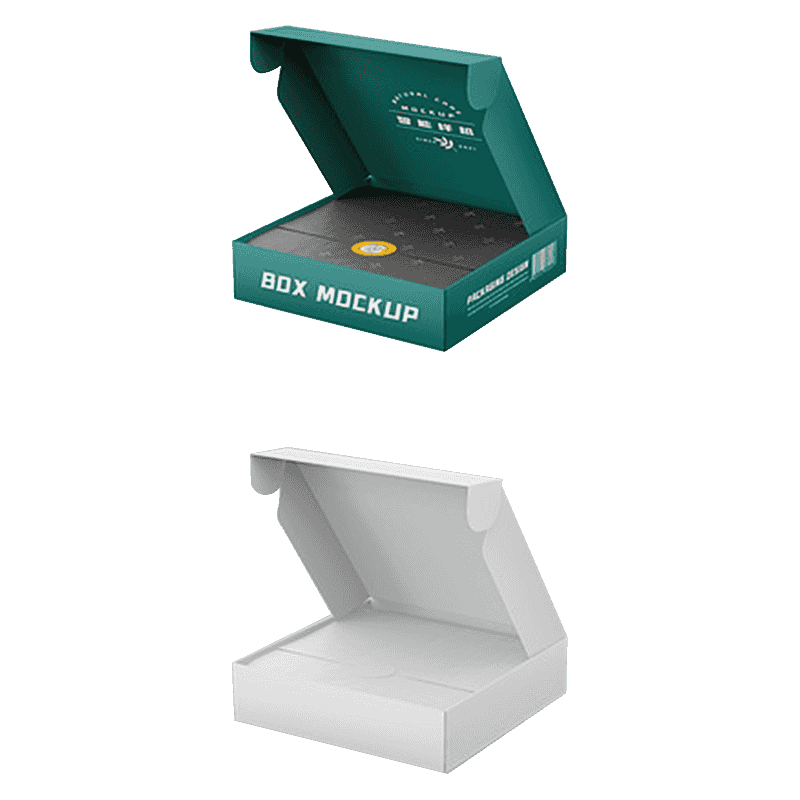 Custom Corrugated Mailer Boxes for Branded UnboxingCustom corrugated mailers combine full-color printing, inserts, and structural fit, letting brands check artwork and closure before sampling.View Product →
Digital Mockup or Physical Sample?
A 3D model and a physical sample answer different questions. Treat them as two stages of one process rather than competing options.
| Question | 3D model | Physical sample |
|---|---|---|
| Does the product fit with clearance? | Yes, to the millimetre | Yes, in your hands |
| How does the board feel and hold? | Approximate only | Fully, including stiffness |
| Do colours and finishes read correctly? | Indicative | Printed and laminated as sold |
| How quickly can details change? | Minutes | Days for a new sample |
| What does being wrong cost? | Almost nothing | Sample cost and lost time |
The practical answer is to use both: a fast model for the dozen edits that happen in the first week, then one physical sample to confirm what the model promised.
Design Details That Decide Whether the Box Survives
A convincing render is not the same as packaging performance. Before a design is released to production, we check the details that quietly determine whether goods arrive undamaged:
- Board grade and flute direction relative to the load and stacking pattern.
- Cushioning at corners and edges, where impact damage usually begins.
- Ventilation for produce, baked goods and anything that releases moisture.
- Crease and print alignment, so text never sits on a fold.
- Compression strength against realistic stacking height and humidity, not only a lab figure.
- Single-material construction, so the whole pack can be recycled without being taken apart.
These checks matter twice, because a good design has to be repeatable. Whether a brand orders five hundred boxes or five hundred thousand, the second run must match the first in board, ink and die. That consistency is why we keep approved dies and specifications on file for customers who reorder regularly.
 Corrugated Brand-Consistent Custom Packaging for Limited RunsDesigned for cultural and creative products, these corrugated boxes support foil stamping, embossing, spot UV, cushioned inserts, and smaller repeatable production runs.View Product →
Smaller Brands: Getting 3D Design Without a Studio
Not every team has a packaging engineer on staff, and most do not need one. For smaller brands, the practical route is to start from a proven structure and adapt it rather than inventing a new shape from nothing. A standard mailer or folding box style has known tooling, known board grades and a predictable cost, so 3D design can focus on the parts customers actually notice: proportions, colour and print.
Beauty and personal care is a good case in point. The outer box has to protect glass and pumps during shipping while still looking considered on a bathroom shelf. Working from an existing structure keeps the project affordable, and the 3D stage becomes a way to test artwork across a curved or partially hidden panel.
Botanical Sketch Subscription Box for Multi-Brand Beauty SetsHand-illustrated corrugated subscription box fits curated assortments, accommodates multiple partner names, and uses color proofing to protect mixed beauty items in transit.View Product →A Short Pre-Production Checklist
When a design is close to approval, these are the questions we ask before cutting a die.
- Is the product's real size confirmed, including any protective wrapping?
- Has the artwork been checked against the dieline rather than only the flat panel?
- Is the board grade matched to the shipping method and stacking height?
- Has a printed sample been approved in daylight, not only on a screen?
- Are barcodes, batch codes and legal text placed where they can be read and scanned?
- Is the packing method documented, so the box is filled the way it was designed for?
Good 3D packaging design is less about impressive renders than about deciding the right things early. When the structure, the material and the artwork are agreed before tooling, production becomes predictable, and predictable production is what keeps a brand's packaging consistent order after order.
If you would like a second opinion on a design, or simply want to see how a structure behaves before committing to a die, send us your dimensions and artwork. Our team can model the box, produce a sample from our own board, and quote from there.

- Contact Us
- Phone:+86-138 1869 0662
- TEL:+86-573 8570 0965
- Email:[email protected]
[email protected] - Address:No. 269, Jinsui Road, Xincang Town, Jiaxing City, Zhejiang Province, China
- Get in Touch

