


 English
  русский
  Français
  Español
  عربى
عربى What Is a Reverse Tuck Box? Structure, Materials and Buying Guide Explained
Sep 28, 2026
Content
Pick up almost any slim retail carton, a bar of soap, a tube of hand cream, a box of biscuits, and you are probably holding a reverse tuck box. It is one of the most widely used folding carton styles in the world, and the reasons are practical: it ships flat, closes without glue, and gives a brand a clean, uninterrupted printed panel on the shelf. Below, our team at Zhejiang Wenchen Packaging Technology explains what a reverse tuck box actually is, how it differs from a straight tuck carton, which board grades work best, and what to confirm before you place an order.
What Is a Reverse Tuck Box?
A reverse tuck box is a one-piece folding carton die-cut from a single flat blank and glued along one side seam. It has two tuck flaps, one closing the top opening and one closing the bottom, and the word reverse describes where those flaps are hinged. On a reverse tuck end (RTE) carton, the top tuck flap is attached to one panel and the bottom tuck flap to the opposite panel, so the two flaps tuck in opposite directions when the box is closed. On a straight tuck end (STE) carton, both flaps are hinged to the same panel and tuck the same way.
That single structural difference changes how the carton behaves in production. Because the flaps are reversed, the box can be loaded and closed from either end, both closed faces stay flatter under load, and the two flaps do not interfere with each other on a high-speed filling line. Small dust flaps on the sides of each opening hold the tuck flap once it is pushed home, which is why a well-made reverse tuck box stays shut without tape or adhesive.
Reverse Tuck vs. Straight Tuck: How to Choose
The table below summarises the styles you are most likely to compare. If your product is light, rectangular and sold on a shelf, either RTE or STE will usually work. The deciding factors are how the carton is filled, which panel faces the customer, and how the flaps behave when the box is packed tightly.
| Carton style | Flap position | Closing behaviour | Typical use |
|---|---|---|---|
| Reverse tuck end (RTE) | Top and bottom flaps hinged to opposite panels | Flaps tuck in opposite directions; both ends close flat | Cosmetics, confectionery, pharmacy, small hardware |
| Straight tuck end (STE) | Both flaps hinged to the same panel | Flaps tuck in one direction; simple and economical | Sleeves, very light retail goods, promotional packs |
| Tuck top, auto bottom | Tuck top, crash-lock base | Base pops open by hand, no tucking required | Mail order and subscription boxes needing fast filling |
| Sealed end | No tuck flaps; ends are glued | Strongest closure, but one-way | Heavier or tamper-evident retail packs |
In practice, reverse tuck cartons have an edge wherever both ends of the pack must close flat and stay flat, such as a narrow carton that stands on a shelf edge or a bar pack that is handled repeatedly in a store. Straight tuck cartons remain the more economical option for very light items and simple sleeves.
The Anatomy of a Reverse Tuck Box
Knowing the parts helps when you review a drawing or discuss a quotation with a converter.
- Tuck flap: the curved tab that folds into the opening and locks the carton closed.
- Dust flaps: the two side flaps the tuck flap slides behind, keeping dust out and the closure tight.
- Front and back panels: the largest faces, usually the printed brand panels.
- Side panels: the narrow faces, and where the glued seam sits in most layouts.
- Glue flap: a narrow strip glued to the opposite panel to form the tube.
- Score lines: creases that define every fold and control how square the finished box is.
The cutting and creasing layout is the most important document in the project, because a fraction of a millimetre in the wrong place shows up as a carton that will not close squarely. If you would like a plain-language primer on how these drawings are built, our guide to the dieline in packaging explains the conventions and the checks that catch problems early.
Materials: Which Board Suits a Reverse Tuck Box?
Most reverse tuck boxes are made from paperboard rather than heavy corrugated board, because the tuck flaps must flex and the carton has to stay slim. Board choice drives print quality, stiffness and cost.
| Board grade | Typical caliper | Characteristics | Good fit for |
|---|---|---|---|
| SBS (solid bleached sulfate) | 12 to 24 pt | Bright white both sides, excellent print, food-contact grades available | Cosmetics, confectionery, pharmacy |
| CRB (coated recycled board) | 14 to 24 pt | Grey reverse side, good print, lower cost | Dry goods, hardware, household items |
| Kraft or uncoated | 14 to 18 pt | Natural appearance, strong environmental signal | Artisan food, gifts, natural brands |
| E-flute corrugated | Approx. 1.5 mm | More crush resistance, still folds cleanly | Mailer-style cartons, heavier consumer items |
If your product needs more protection than paperboard can offer, a micro-flute structure can be produced in the same reverse tuck shape. When a run needs something more specific, our custom packaging team can build a board and box specification around your product dimensions and filling method.
Where Reverse Tuck Boxes Are Used
The style suits almost any product that is light, rectangular and sold in a retail or mail order environment. Common categories include:
- Confectionery, biscuits, tea and coffee
- Cosmetics and personal care
- Over-the-counter medicine and medical devices
- Small electronics and accessories
- Hardware and DIY parts
- Pet treats and supplements
Food and Confectionery
Biscuits, chocolate bars, tea sachets and coffee capsules all sit comfortably in a reverse tuck carton, and food-grade board with a grease-resistant treatment is usually the right answer where oils are involved.
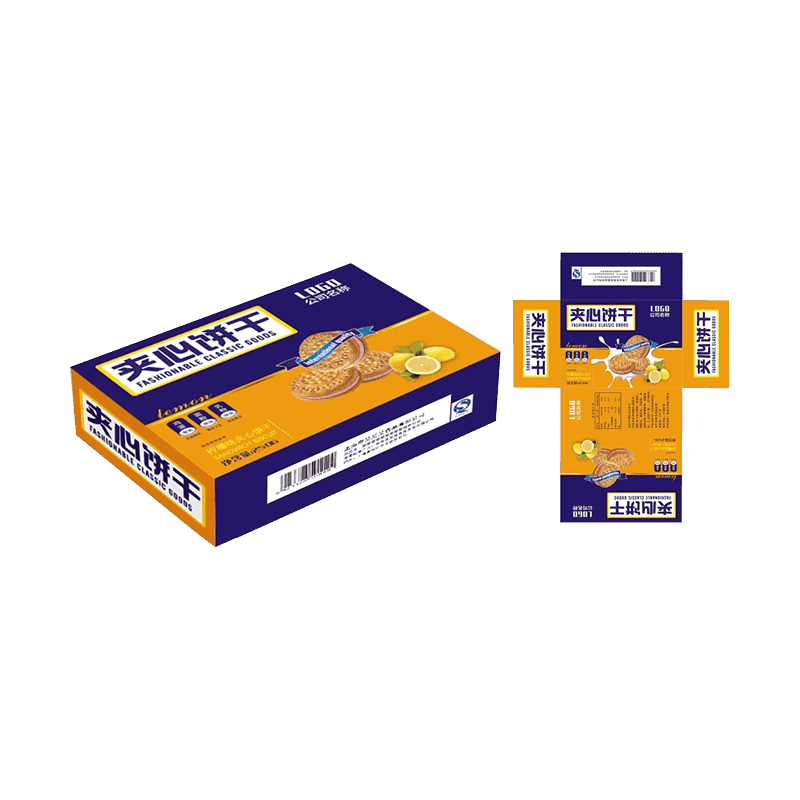 Corrugated Biscuit Packaging BoxesBiscuits break. That makes cushioning against compression and shock a bigger concern than with most food packaging, on top of the food-contact safety requirements that...View Product →
Beauty and Personal Care
Skincare, soap, fragrance samples and gift sets benefit from the crisp print and tight closures this style delivers, and the surface finish can be matched to the brand, from soft matte to a high-gloss look.
 Blush Dot Self-Care Mailer BoxWe designed this mailer box to feel like a small gift the moment it arrives, scattering blush and rose dots across a warm pink base rather than reaching for a single f...View Product →
Healthcare and Medical Packs
Cartons for masks, thermometers and similar items need clean closures, clear print for instructions, and consistent dimensions run after run, all of which this structure handles well.
Corrugated Disposable Mask Packaging BoxesMask packaging needs to protect product integrity during transit and storage — moisture, dust, and physical damage can compromise masks before they reach a healthcare ...View Product →Design and Printing Considerations
- Keep artwork 3 mm inside the trim on all sides, and extend bleed beyond the cut line.
- Leave enough clearance around score lines so folded text does not crack the coating.
- Control the depth of the tuck flap: too shallow and the box pops open, too deep and it buckles.
- Choose a coating or varnish that survives repeated opening, not just looks good in a sample.
- Place barcodes and regulatory text on a flat panel rather than across a fold.
- Confirm grain direction so the flaps fold easily and the carton stays square.
Sustainability and Recycling
Reverse tuck boxes are already a low-waste format. They use a single piece of board, they need no adhesive to close, and they ship flat, which means far fewer trucks on the road than pre-glued rigid boxes. In most markets a plain printed paperboard carton is accepted in paper recycling streams. Where a brand wants a stronger claim, we can discuss board from certified responsible sources and water-based coatings rather than plastic lamination, so the pack stays easy to recycle after use.
A Practical Ordering Checklist
- Measure your product at its widest point and add clearance for a comfortable fit.
- Decide which panel will carry the main brand artwork and which end is opened first.
- Confirm the board grade, caliper and any food-contact or barrier requirement.
- Approve the dieline before printing, ideally from a plain white sample.
- Ask for a printed proof to check colour, finish and barcode legibility.
- Confirm carton quantities, palletisation and delivery schedule in writing.
A reverse tuck box is proof that good packaging design does not have to be complicated. Two flaps on opposite ends, one glued seam and a well-controlled dieline give you a carton that fills quickly, closes firmly and presents a clean face to the customer. If you are weighing up this style against another option, or you need a carton built to your own dimensions and artwork, our engineers and print team are happy to work through the details with you and send samples before anything goes to production.

- Contact Us
- Phone:+86-138 1869 0662
- TEL:+86-573 8570 0965
- Email:[email protected]
[email protected] - Address:No. 269, Jinsui Road, Xincang Town, Jiaxing City, Zhejiang Province, China
- Get in Touch

