


 English
  русский
  Français
  Español
  عربى
عربى Quality Assurance for Folding Carton Producers: A Practical Plant-Floor Guide
Sep 21, 2026
Content
- 1 What Quality Assurance Really Covers in a Folding Carton Plant
- 2 Incoming Material Control: Where Most Defects Begin
- 3 The Converting Floor: Die-Cutting, Creasing, and Registration
- 4 Gluing, Folding, and the Tests That Predict Field Failure
- 5 Sampling, AQL, and Statistical Process Control
- 6 Documentation, Traceability, and Audit Readiness
- 7 Working With a Supplier Whose Quality System Starts Upstream
- 8 A Short Checklist Before You Approve Any Carton Supplier
Folding carton quality is rarely decided at the final inspection bench. It is decided much earlier: in the board that arrives at the plant gate, in the tolerance a die-cutting press can hold at speed, in the depth of a crease line, and in the viscosity of the glue in the pot. When a brand owner opens a pallet and finds flaps that spring open or panels that print out of register, the root cause is almost always a small deviation that began several processes upstream.
This guide is written for production managers, quality engineers, and packaging buyers who need a working definition of quality assurance for folding carton producers: what to measure, where to measure it, and how to document it so that a good run becomes repeatable instead of lucky.
At Zhejiang Wenchen Packaging Technology, we have manufactured board and boxes since 2004 across two plants in Zhejiang and Jiangxi, and the lesson from more than two decades of converting is straightforward: quality is a system, not a final check.
What Quality Assurance Really Covers in a Folding Carton Plant
Many teams reduce quality assurance to pass or fail at the end of the line. On the converting floor, that approach hides the variables that actually create scrap. A workable QA system has four layers: incoming material control, in-process control at every converting step, finished-goods verification against a written specification, and a documentation trail that makes traceability possible.
Each layer answers a different question. Incoming control asks whether the substrate is what the specification claims. In-process control asks whether the machine held its setting. Finished-goods verification asks whether the carton will survive the customer's packing hall and the journey after it. Documentation asks whether you can prove all of this six months later, when a claim arrives on your desk.
| Stage | What is verified | Typical failure mode |
|---|---|---|
| Incoming board | Grammage, caliper, moisture, surface and printability | Wavy or curled board, delamination, weak print surface |
| Printing and prepress | Colour against an approved standard, registration, ink adhesion | Mottled solids, hickeys, colour drift between lots |
| Die-cutting | Cut position, nicks and ties, crease depth and width | Torn creases, poor stripping, blanks that jam the gluer |
| Folding and gluing | Glue pattern and volume, seam strength, carton squareness | Open side seams, skewed cartons, misfeeds in packing |
| Finishing and palletising | Count accuracy, bundle compression, moisture protection | Crushed pallet corners, damp cartons, short shipments |
Incoming Material Control: Where Most Defects Begin
Ask an experienced converter where defects originate and the answer usually points backwards, not forwards. Board that arrives slightly out of caliper specification shifts crease performance across the whole run. Board with uneven moisture, often the result of a long and unprotected journey, will curl, crack along the score, or print with a mottled surface.
Practical incoming checks for folding carton producers include:
- Grammage verification against the purchase specification, using a calibrated scale.
- Caliper readings at several points across the sheet, not only in the middle.
- Moisture content, held in a narrow band so the board stays dimensionally stable on press.
- Surface assessment: smoothness, coating integrity, and freedom from visible scratches or mill splices.
- Printability trials for every new lot or supplier, particularly before a large seasonal order.
Inks, coatings, and adhesives deserve the same discipline. Adhesive batches that vary in viscosity change open time and green strength, and that variation eventually shows up as popped seams on a customer's erecting line. For food contact cartons, each incoming chemical also needs a documented compliance statement and a retention sample.
The Converting Floor: Die-Cutting, Creasing, and Registration
Die-cutting fixes the geometry of the carton, which is why tolerance discipline matters most here. Three areas reward attention.
Cutting dies, counters, and routine maintenance
A die that has cut two million blanks is not the tool it was on day one. Ejection rubber, rule height, and counter condition all drift with use. Scheduled die inspection, combined with a documented first-off approval after every tooling change, prevents the slow creep of burrs, incomplete cuts, and ragged edges that later cause misfeeds in a customer's automatic erecting equipment.
Crease depth is not a cosmetic detail
A correct crease folds cleanly at high speed and holds its shape without cracking the coating. Under-creased cartons bulge and refuse to sit square; over-creased cartons crack, especially on coated grades or when folding across the grain. Matching crease rule height and matrix width to the board caliper, then re-checking after each reel or pallet change, remains the cheapest quality control available to any converter.
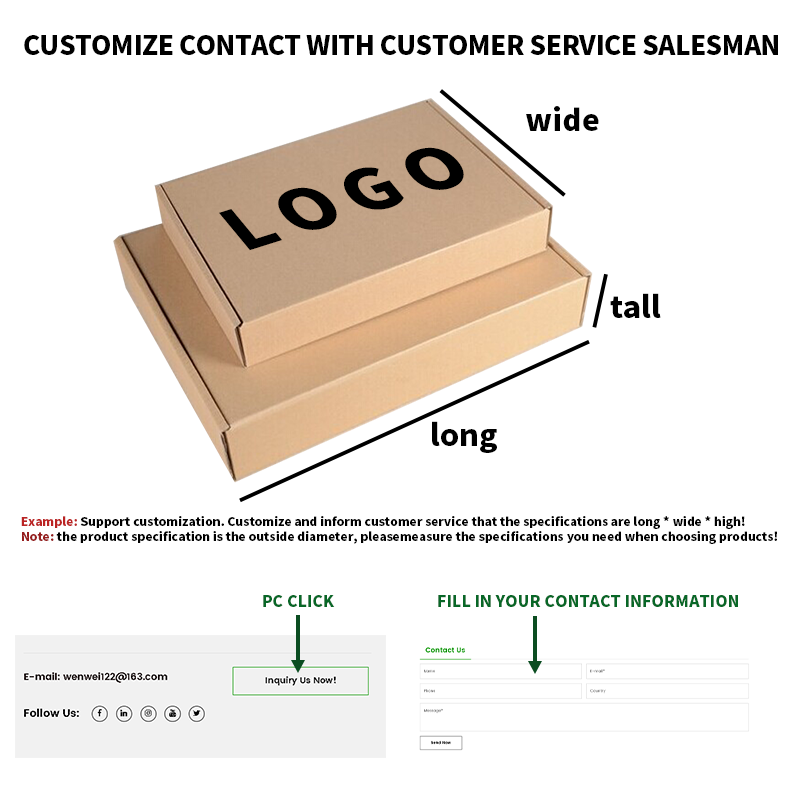 Cardboard Folding Shipping BoxesThese cardboard folding shipping boxes, also known as airplane boxes, feature an innovative collapsible design and are widely used in e-commerce logistics, gift packag...View Product →
Registration and tolerance windows
Print-to-cut registration is the specification most often argued about between buyer and supplier, so it should always be written down as a number rather than described as good quality.
| Feature | Working tolerance | Why it matters |
|---|---|---|
| Print-to-cut registration | ±0.5 mm | Keeps branding centred after folding |
| Blank length and width | ±0.5 mm | Controls fit inside the packing line |
| Glue tab position | ±1.0 mm | Prevents seam overlap and popped joints |
| Crease position | ±0.3 mm | Determines squareness when erected |
| Board moisture at converting | 6% to 8% | Reduces curl, cracking, and warp |
Gluing, Folding, and the Tests That Predict Field Failure
Once the blank is formed, quality becomes a question of bond and geometry. Three measurements catch most problems before a pallet leaves the building.
- Seam bond strength: a properly glued seam tears board fibres when pulled apart rather than peeling cleanly.
- Squareness: measure the diagonals. A skewed carton is a jam waiting to happen on a high-speed erector.
- Compression performance: on corrugated and heavier boards, edge crush or burst values predict how a stack behaves in the warehouse.
Specification language matters just as much. Ratings, flute profiles, and standard box codes give buyer and supplier a shared vocabulary, and they belong in the purchase order rather than in a verbal agreement. Readers who want the technical background can start with our overview of corrugated box standards explained, which covers the test methods behind those numbers.
Sampling, AQL, and Statistical Process Control
No converting plant inspects every carton, and no sensible buyer expects it. Instead, quality assurance for folding carton producers relies on agreed sampling plans, usually derived from an AQL table and applied to defined defect classes. A cut that reaches the print area is critical; slight colour drift inside an agreed tolerance is minor. Deciding which is which, in writing, prevents most disputes long before they happen.
Beyond sampling, mature plants track process capability. Plotting crease depth, glue weight, or registration offset on a control chart shows whether a process is stable or drifting, and it flags a tooling change before thousands of blanks are wasted. One habit worth copying: keep a sealed golden sample from the approval run and use it as the physical reference at every reprint.
Documentation, Traceability, and Audit Readiness
Certification is not a quality system by itself, but it is the shorthand most buyers use. ISO 9001 requires documented procedures and closed-loop corrective action. Chain-of-custody certification supports claims about fibre sourcing. Food contact rules demand material declarations and migration awareness for anything that touches a bakery item, a snack, or a takeaway meal.
A practical traceability system links four data points: the incoming board lot, the machine and shift that ran the job, the inspection results at each stage, and the bundle or pallet ID that shipped. With that chain in place, a single retained sample can answer a customer complaint in minutes rather than days.
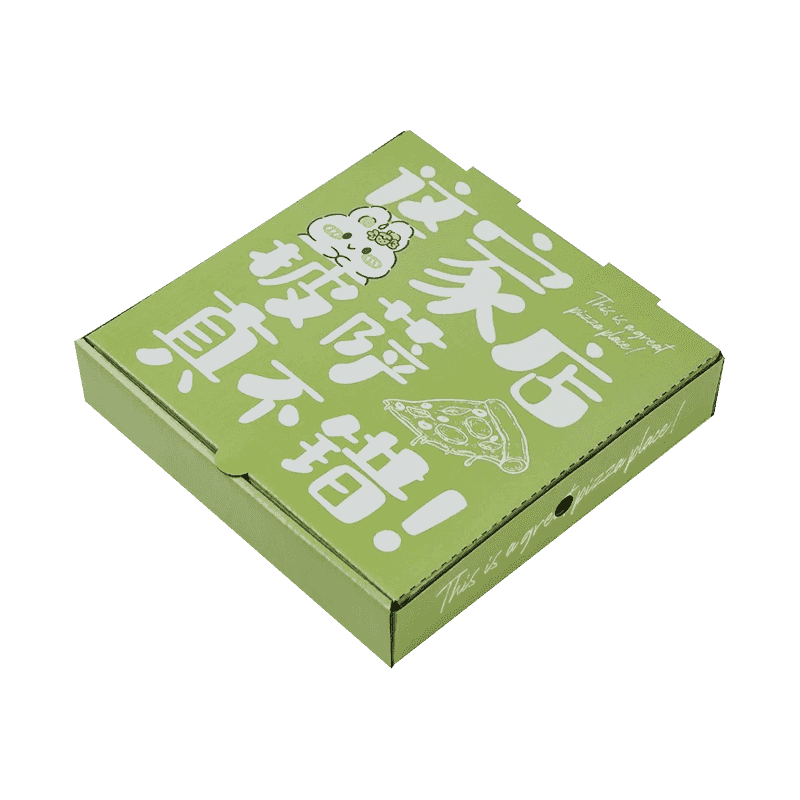 Corrugated Pizza Takeout Box, Custom LogoA pizza box has to do more than just hold a pizza — it needs to keep it hot, prevent sogginess from steam, and survive the trip from oven to doorstep without collapsin...View Product →
Working With a Supplier Whose Quality System Starts Upstream
Vertical integration does not automatically produce better cartons, but it removes one variable: the board maker's consistency sits inside your supplier's control instead of outside it. Zhejiang Wenchen Packaging Technology produces board and converts it in-house, which lets us inspect the substrate at the source, hold tolerances through every converting step, and trace a finished carton back to the board lot it came from.
Our two plants, in Jiaxing, Zhejiang and Zhangshu, Jiangxi, cover a combined site area of 61,111 square metres, with annual board capacity of 150 million square metres and monthly box output of around 80 million units. Both sites sit close to major highways, and the Jiaxing facility is roughly two kilometres from the G15 expressway exit, which keeps delivery schedules predictable for customers running lean inventories.
For buyers who prefer to see a system rather than read about it, we welcome factory visits and provide samples, dielines, and written specifications before any commitment is made.
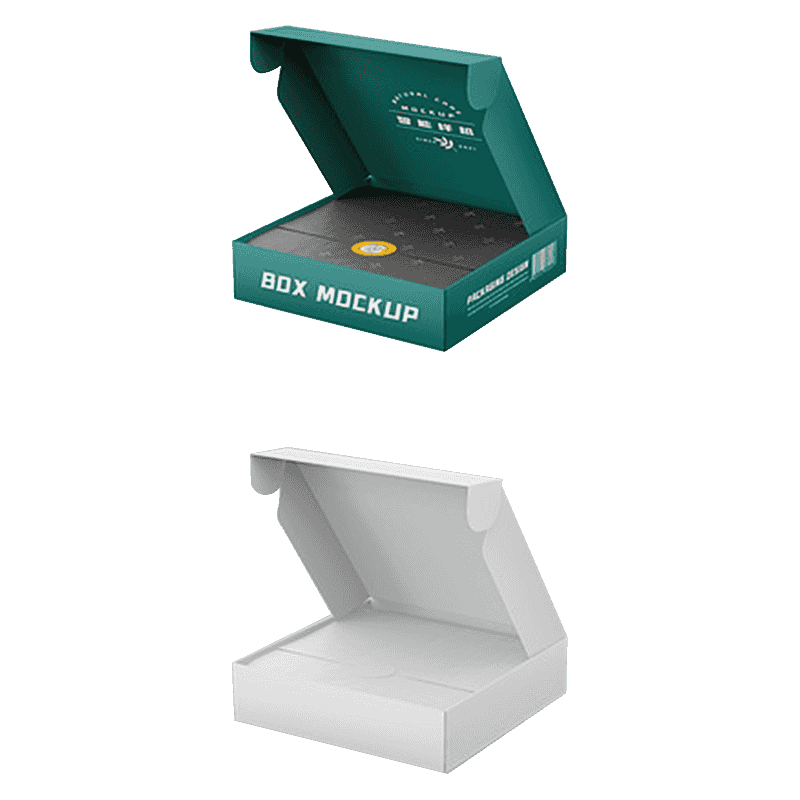 Custom Corrugated Mailer BoxesFor brands that treat the box as part of the product experience, packaging color and print quality matter as much as what's inside. Custom Corrugated Mailer Boxes are ...View Product →
A Short Checklist Before You Approve Any Carton Supplier
- Is there a written specification with measurable tolerances for board, print, crease, and glue?
- Does the supplier keep first-off approval records and tooling maintenance logs?
- Which defects are classed as critical, major, and minor, and what sampling plan applies to each?
- Can a shipped pallet be traced back to the board lot and the machine that produced it?
- Are retained samples stored, and for how long?
- How are complaints and corrective actions closed out and reviewed with the customer?
Quality assurance for folding carton producers is ultimately a discipline of small, repeatable measurements taken at the right moments: incoming board, print, die-cutting, gluing, and final packing. None of those steps is glamorous, but together they decide whether a carton opens smoothly on a retail shelf, survives a parcel network, or fails in front of the person who bought it.
If you are specifying a folding or corrugated carton programme and want a partner who will put tolerances, test methods, and traceability in writing from the first quote, our team is ready to review your requirements, share samples, and walk you through the production process in person.

- Contact Us
- Phone:+86-138 1869 0662
- TEL:+86-573 8570 0965
- Email:[email protected]
[email protected] - Address:No. 269, Jinsui Road, Xincang Town, Jiaxing City, Zhejiang Province, China
- Get in Touch

