


 English
  русский
  Français
  Español
  عربى
عربى Packaging & Brand Design for Cosmetic Products: Insights From a Box Maker
Sep 18, 2026
Content
- 1 Two Jobs, One Box: Shelf Appeal and Shipping Reality
- 2 Start With Structure, Not Colour
- 3 Print, Colour and Finish: Making the Brand Visible
- 4 Sustainability Is Now Part of the Brand Story
- 5 A Workflow That Keeps Design and Production in Step
- 6 Mistakes We See Most Often
- 7 Where Corrugated Fits in Beauty Packaging
- 8 Match the Box to the Product, Not the Other Way Around
- 9 Questions Worth Asking Your Packaging Partner
- 10 Let's Build the Next One Together
Ask any beauty founder what keeps them awake at night, and you will usually hear two answers: "Will it stand out on the shelf?" and "Will it arrive in one piece?" Packaging and brand design for cosmetic products has to solve both problems at once. The box that reaches a customer's hands is the first physical moment of the brand — before the serum, the lipstick or the scent. It carries colour, typography, texture and weight, and it also has to survive a sorting centre, a courier van and a doorstep.
We have been manufacturing corrugated packaging since 2004, from plants in Jiaxing, Zhejiang and Zhangshu, Jiangxi. Over that time we have watched cosmetic packaging move from purely decorative to something that must be attractive, protective and responsible at the same time. Here is how we approach it.
Two Jobs, One Box: Shelf Appeal and Shipping Reality
Cosmetic packaging design usually splits into two layers. Primary packaging is the bottle, jar, tube or compact that a customer keeps. Secondary packaging is everything around it — the folding carton, the sleeve, the corrugated mailer, the gift box. Most design budgets flow towards the primary pack, but the secondary pack is the one that repeats your brand story thousands of times, in every channel, with every order.
Brand design, meanwhile, is about consistency. A shade name, a logo treatment, a colour family and a pattern language should feel identical whether the product is sold from a counter, a beauty subscription box or a livestream promotion. When a brand treats the outer box as a disposable afterthought, that consistency breaks the moment the parcel opens.
The smartest starting point is therefore not "what do we want the box to look like?" It is "what does this box have to do?"
Start With Structure, Not Colour
We see this mistake constantly: artwork is approved before anyone has decided on box style, board grade or fitment. The result is beautiful art squeezed onto a structure that cannot protect the product or pack efficiently.
Box style decides the unboxing moment
A tuck-front carton belongs on a retail shelf. A crash-lock base speeds up manual packing. A mailer box with a tear strip gives the customer a satisfying opening without reaching for a knife. A rigid-look corrugated gift box works when the product is a gift set or a limited edition. Each option changes how the brand feels in the hand, and each one changes tooling, cost and packing time.
Board grade and flute keep the product safe
For cosmetic items we usually start with E-flute or B-flute corrugated board. E-flute gives a smooth, flat printing surface and a slim profile for retail cartons. B-flute adds cushioning for mailers and multi-item sets. When a box holds glass bottles, we add a die-cut corrugated insert so the bottle never touches the outer wall. That single insert often prevents more damage claims than any amount of extra tape.
Print, Colour and Finish: Making the Brand Visible
Once the structure is fixed, print choices become predictable — and predictable means affordable. The table below summarises the decisions that matter most in practice.
| Design element | What it controls | Practical starting point |
|---|---|---|
| Board and flute | Rigidity, weight, print surface | E-flute for retail cartons, B-flute for mailers |
| Box style | Unboxing experience, packing speed | Tear-strip mailer for e-commerce, tuck-front for shelf |
| Print method | Colour range, detail, unit cost | Flexo for bold spot colour, litho-lam for photographic art |
| Colour and pattern | Category signal, shelf blocking | Soft pastels for skincare, saturated accents for colour cosmetics |
| Insert or fitment | Protection and presentation | Die-cut corrugated fitment for bottles, jars and compacts |
| Closure | Tamper evidence, returns, reuse | Crash-lock base plus tuck top for a clean, resealable finish |
Two rules from our production floor: choose the finish based on how the box will be handled, not only how it photographs; and keep ink colours low on a box that goes straight into a courier network, where it will be scuffed and sorted regardless.
Sustainability Is Now Part of the Brand Story
Shoppers read packaging. A mono-material corrugated box that can be recycled in a standard paper stream tells a clearer story than a mixed-material pack with a peeling laminate. Kraft board has moved from "cheap" to "considered", and plenty of indie beauty brands now build whole identities on that natural, unfinished look.
The practical steps are simple: keep the box single-material wherever possible, choose water-based inks and avoid unnecessary plastic windows, let the box itself do the protective work instead of adding foam, and print recycling guidance directly on the base. None of this requires a bigger budget — it requires deciding early.
A Workflow That Keeps Design and Production in Step
- Define the product set: dimensions, weight, fragility, and how many units ship together.
- Choose the sales channel and the box style that fits it.
- Select board grade, flute and any internal fitment.
- Agree on the print method, colour range and finish.
- Request a plain structural sample to test packing speed and drop performance.
- Approve a printed proof or pre-production sample for colour and registration.
- Confirm carton quantities, pallet configuration and delivery schedule before the run starts.
Steps five and six are the ones brands skip when they are in a hurry. They are also the two that prevent a reprint.
Mistakes We See Most Often
- Artwork approved before the dieline exists, forcing last-minute compromises.
- Inserts designed as an afterthought, leaving glass bottles to rattle in transit.
- Colours specified from a screen rather than a printed proof.
- Boxes designed for a retail counter but shipped through a courier network.
- Decoration added to a box that a customer only ever sees inside a mailer.
- Order quantities guessed rather than calculated from real storage and shelf-life limits.
Where Corrugated Fits in Beauty Packaging
Corrugated board has a reputation as a shipping material, but its printed surface and structural range make it a genuine design medium for beauty brands. A mailer box can carry the same pattern language as the primary pack. A subscription box can be built to hold several different product formats. A gift box can be produced in a small run for a seasonal launch.
Two recent examples from our cosmetic range show how far this can go:
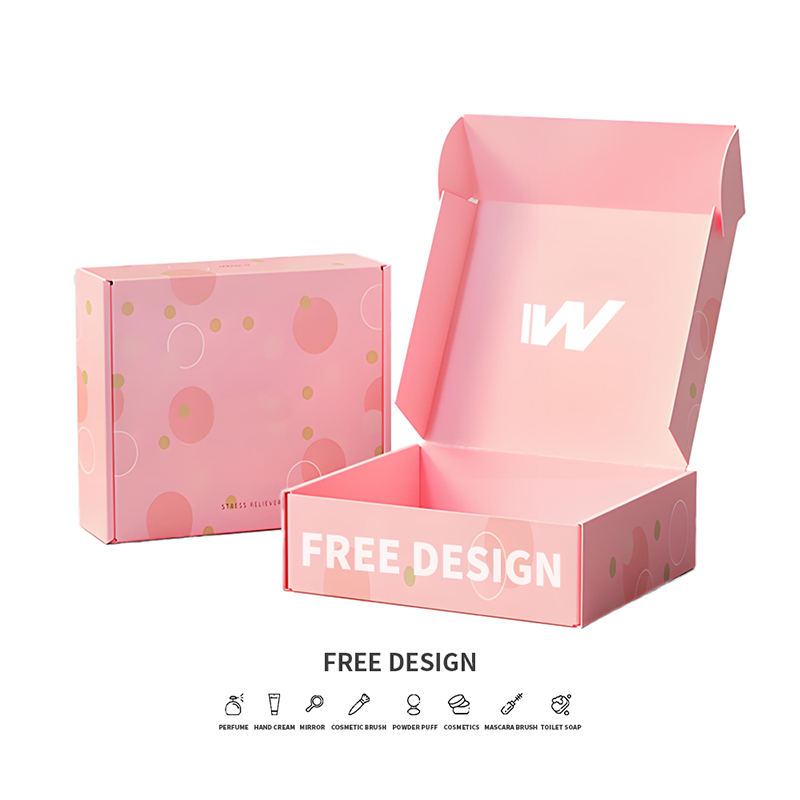 Blush Dot Self-Care Mailer BoxWe designed this mailer box to feel like a small gift the moment it arrives, scattering blush and rose dots across a warm pink base rather than reaching for a single f...View Product →
 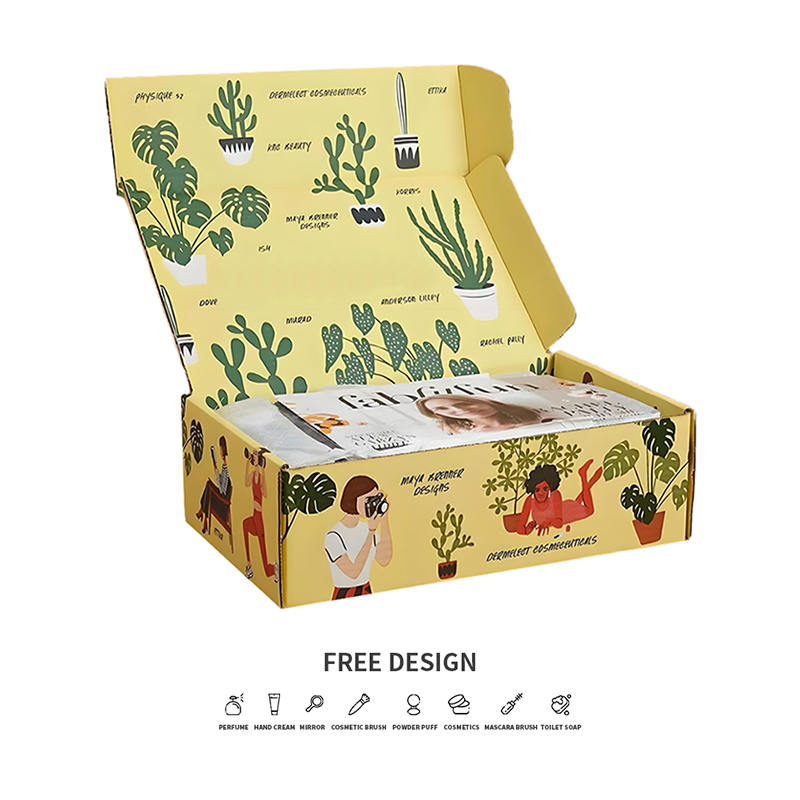 Botanical Sketch Subscription BoxWe covered this box edge-to-edge in hand-illustrated cacti, monstera leaves, and lifestyle sketches, building it specifically for the multi-brand subscription box form...View Product →
Both pair a decorative outer surface with a structure designed to be packed quickly and shipped safely — the two things that keep a beauty brand's promise intact between the warehouse and the bathroom shelf.
Match the Box to the Product, Not the Other Way Around
Skincare sets, colour cosmetics, travel sizes and refills each behave differently in transit. A set with a glass dropper bottle needs a fitment and a slightly deeper box. A lipstick assortment needs dividers or a tray so the bullets do not shift. A single refill pouch needs a slim, low-cost carton with a clean opening.
This is also where a decorative gift box earns its place — a launch, a holiday set or a collaboration can use a more elaborate structure without changing the everyday packaging line:
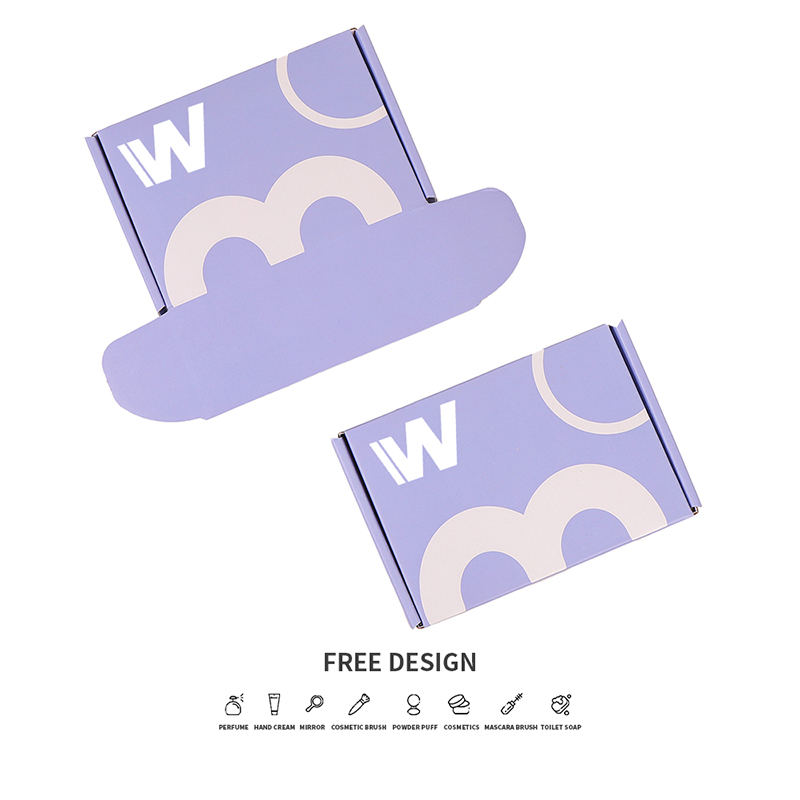 Lavender Cloud Corrugated Gift BoxWe built this design around oversized cloud and rainbow shapes in soft lavender, aiming for a clean, graphic look that reads as modern and a little whimsical without t...View Product →
Questions Worth Asking Your Packaging Partner
- Can you supply a plain structural sample before tooling is cut?
- Which flute and board grade do you recommend for this product weight?
- How will the box perform in a drop test and on a pallet?
- What are your minimum order quantities for a printed run?
- How do you control colour consistency across repeat orders?
- Can you print recycling information and board certification details on the box?
A supplier who answers these in specifics — board grades, flute profiles, run lengths, lead times — is a supplier who can protect your launch date.
Let's Build the Next One Together
Packaging and brand design for cosmetic products works best when the designer and the box maker talk early. Structure, print and protection decisions are far cheaper to make on paper than on a finished pallet.
Since 2004 we have produced corrugated board and boxes in-house in Zhejiang and Jiangxi, with annual board capacity of 150 million square metres and monthly box output measured in tens of millions of units. If you would like to see that capacity applied to beauty, browse our corrugated cosmetic packaging boxes or read more about how corrugated cardboard cosmetic packaging combines durability, design and sustainability. Send us your product dimensions and a rough idea of the look you want, and we will come back with a structure, a grade recommendation and a price.

- Contact Us
- Phone:+86-138 1869 0662
- TEL:+86-573 8570 0965
- Email:[email protected]
[email protected] - Address:No. 269, Jinsui Road, Xincang Town, Jiaxing City, Zhejiang Province, China
- Get in Touch

