


 English
  русский
  Français
  Español
  عربى
عربى How to Choose a Cardboard Book Display: Flutes, Load Limits, Printing and Flat-Pack Design
Aug 19, 2026
Content
- 1 Why corrugated board makes sense for book displays
- 2 Flute structure and board grade: choose strength before design
- 3 Structural design considerations for retail use
- 4 Printing and branding: let the display sell before the book is opened
- 5 Flat-pack delivery and in-store assembly
- 6 Modular displays and reusable fixtures
- 7 From display to online orders: one packaging system
- 8 Sourcing from an integrated corrugated manufacturer
When a stack of hardcover books toppled a lightweight display in the middle of a busy sales event, the store owner did what most retailers eventually do: asked for something stronger. The fix was a cardboard book display with a double-wall base, straight side walls and a printed top shelf. A well-designed cardboard book display keeps heavy books stable, ships flat, and can be branded as sharply as any permanent fixture. Everything else, from flute type to load capacity, follows from those core requirements.
Why corrugated board makes sense for book displays
Most people say cardboard when they mean corrugated board: a fluted medium between two flat liners. For a book display, that structure matters. The flutes create vertical columns that resist bending, while the liners provide a clean printable surface. Corrugated also has a high strength-to-weight ratio, so a display can be light enough for staff to move but strong enough to hold a row of encyclopedias.
When the board and the finished display are made under the same roof, the material in the prototype is exactly the material that reaches the store. That consistency is the real difference between a display that looks strong in a sample photo and one that actually survives a week of shoppers.
Flute structure and board grade: choose strength before design
The most common specification mistake is selecting a display by looks alone. Two displays can carry the same cover image and have completely different load limits. The flute is the first thing to check. E-flute is roughly 1.5 mm thick and gives a smooth surface for detailed printing. B-flute is about 3 mm thick and is a reasonable all-round choice for boxes and smaller display bases. C-flute is around 4 mm and gives better stacking strength for floor-standing units. Double wall BC combines B and C flutes for heavy duty structures. A detailed flute size guide can help you compare dimensions before you commit to a design.
| Display format | Recommended board | Load expectation | Typical setting |
|---|---|---|---|
| Tabletop display | E-flute single wall, 23–32 ECT | 8–12 kg per shelf | New releases, checkout counters |
| Floor-standing shelf unit | C-flute single wall, 32–44 ECT | 15–25 kg per shelf | Bookshop aisles, events |
| Dump bin / bargain unit | BC double wall, 44+ ECT | 50–70 kg total | Discount tables, children's titles |
| Modular cube display | Single wall C-flute with reinforced base | 10–15 kg per cube opening | Seasonal or series promotions |
After the flute, look at edge crush test (ECT) ratings. A 32 ECT single wall board is a common baseline for retail displays. For heavier books, 44 ECT double wall is safer, especially for shelf spans wider than 600 mm. If a display will hold dictionaries, cookbooks or art books, do not rely on visual estimates. Calculate the actual load and then test the loaded display.
Structural design considerations for retail use
Book displays fail in predictable ways: shelves bend, displays tip forward, and dividers pop out of their slots. Good design controls all three. Keep the base at least 60 percent of the display height for floor-standing units. Add a small backward rake to shelves so books lean toward the back. Use internal dividers every 150–200 mm to stop books from sliding. Reinforce the front edge of each shelf because that is where customers pull books down.
Compare this with a DIY book stand made from a single carton. It may hold a textbook for a video call, but it will not survive repeated use in a busy aisle. A commercial cardboard book display needs engineered tabs, scored corners and a tested center of gravity. If you are not a structural engineer, buy from someone who has already run those tests.
Printing and branding: let the display sell before the book is opened
The display is not only a fixture; it is a poster. Direct printing on corrugated liner keeps cost under control. Litho-lamination adds photographic quality for cover art, author portraits or lifestyle images. Water-based inks work well for retail graphics. Plan the header text first: the title or theme must be visible from the aisle. Use the lower front panel for a short message or call to action. Avoid putting critical text on creases or near edges where scoring can distort the print.
From a practical standpoint, request a proof on the actual corrugated board. Color looks different on a glossy mock-up than on a kraft or white liner. If the display has a white outer surface, the printed colors will be cleaner; if it uses kraft liner, design with earthier tones.
Flat-pack delivery and in-store assembly
Retail staff does not have time for complicated setup. A good cardboard book display scores every panel so it folds flat for transport and opens into shape without tools. Locking tabs and pre-inserted dividers should click into place. The same fold-flat logic appears in good packaging. Our corrugated folding shipping boxes use the same principle: a flat box that pops up into a rigid structure when assembled. If you need several small openings, a cube-based layout can also be supplied as separate folding units and stacked on site.
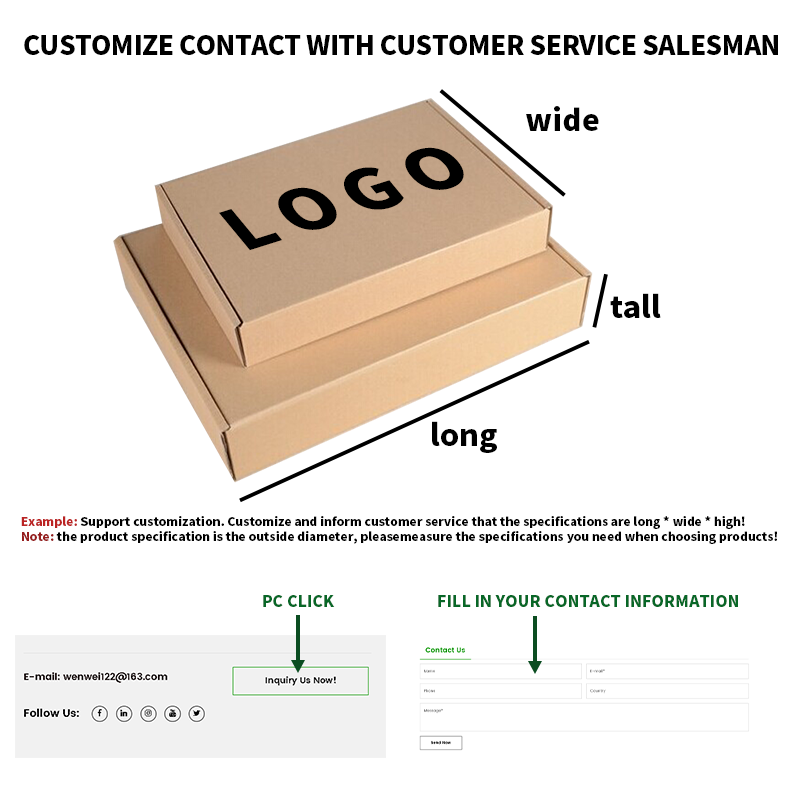 Wholesale Cardboard Folding Shipping Boxes Suppliers, Factory - Zhejiang WenchenWenchen Packaging is China Wholesale Cardboard Folding Shipping Boxes Factory and Cardboard Folding Shipping Boxes Supplier, These cardbo...View Product →
Modular displays and reusable fixtures
Book series and seasonal campaigns benefit from modular displays. Instead of one large unit, you can use several smaller modules that fit on a table, a ledge or a window display. Each module should have a consistent footprint so it can be stacked without gaps. A set of corrugated square storage packaging boxes can be arranged in this way when the opening faces forward and the back is closed with a separate corrugated panel. These units are easy to refill and easy to move to a different part of the store.
Wholesale Cardboard Square Storage Packaging Boxes Suppliers, Factory - ZhejiangWenchen Packaging is China Wholesale Corrugated Cardboard Square Storage Packaging Boxes Factory and Corrugated Cardboard Square Storage ...View Product →From display to online orders: one packaging system
Many retail displays carry products that are also sold online. A customer may pick the book from a display, then order the same title on a phone later. That means the display and the shipping box should feel like the same system. Match the printing style and board quality across both. Custom corrugated mailer boxes protect the book, carry the branding and can be specified with the same ECT rating as the display. Ordering both from one supplier simplifies samples, artwork approval, production schedules and freight.
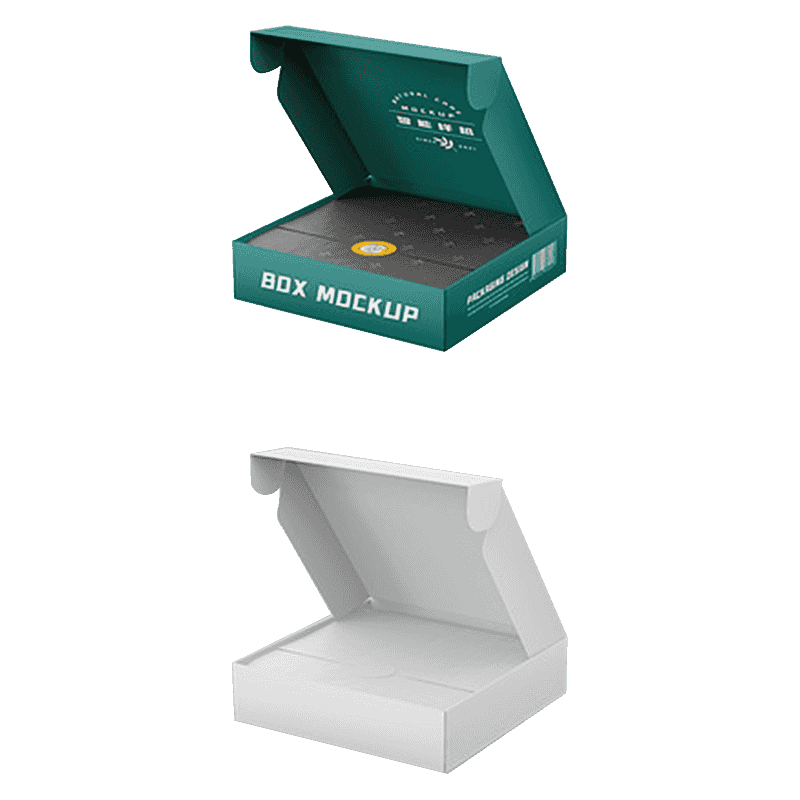 Custom Corrugated Mailer Boxes | Full-Color Branding, Factory DirectCustom corrugated mailer boxes with full-color printing and brand-specific sizing, made in-house in China. Design your unboxing — get a q...View Product →
Sourcing from an integrated corrugated manufacturer
The reason to source a cardboard book display from a corrugated packaging manufacturer that controls board making is accountability. When one supplier controls board production, die-cutting, printing and final assembly, there is no gap between design intent and delivered product. You can test the structural calculation against the actual board, not against a sample made from different materials.
Our company operates two plants, in Jiaxing and Zhangshu, with an integrated board and box production system. That setup gives retail programs a stable supply base and gives procurement teams a single point of contact for quote, proof and delivery schedule. With more than fifteen years of corrugated production experience, we have seen enough display failures to know where strength is needed and where decoration can be simplified.
The best result is not a bigger box; it is a display with the right flute, the right ECT, clean printing and a realistic assembly process. Start there, and the cardboard book display will do its job: hold the books, make the sale and make the supplier look good.

- Contact Us
- Phone:+86-138 1869 0662
- TEL:+86-573 8570 0965
- Email:[email protected]
[email protected] - Address:No. 269, Jinsui Road, Xincang Town, Jiaxing City, Zhejiang Province, China
- Get in Touch

