


 English
  русский
  Français
  Español
  عربى
عربى FDA Food Packaging Requirements: Compliance Guide for Corrugated Box Buyers
Sep 04, 2026
Content
- 1 The First Rule of FDA Food Packaging
- 2 What FDA Food Packaging Requirements Actually Cover
- 3 Food Contact Substance Compliance: Four Routes
- 4 Labeling Requirements: What Every Food Box Must Carry
- 5 Material and Construction Decisions for Corrugated Food Packaging
- 6 Buying Checklist for Food Brands and Importers
- 7 Final Word
The First Rule of FDA Food Packaging
Corrugated food packaging will never come with an FDA seal. If you are preparing to ship food in the United States, the practical question is not whether the printed box has been approved. It is whether every substance inside the material, from the starch adhesive to the printing ink, meets FDA rules for food contact substances, and whether the label says everything a shopper or inspector needs to know.
The FDA does not certify packaging. It regulates the substances that can come into contact with food and the information that must appear on a food label. That distinction matters when you are sourcing corrugated boxes. A supplier cannot hand you an "FDA approved box." The supplier can, however, provide evidence that the components used to build that box are compliant for the intended contact.
What FDA Food Packaging Requirements Actually Cover
FDA requirements for food packaging go through two broad channels. The first includes food contact substances. A food contact substance is any material that may contact food under the conditions of use. In a corrugated box, that can include the liner paper, the medium, starch-based adhesive, flexographic ink, coatings, and even recycled fibers used in the board.
The second channel is food labeling. Food label rules come from the Federal Food, Drug, and Cosmetic Act and the Fair Packaging and Labeling Act. They decide how the food is identified, how much is inside, what ingredients are present, which allergens must be declared, and who is responsible for the product.
Food packaging itself is not preapproved. Instead, manufacturers and converters use the appropriate regulatory path for each substance they introduce. This is why the buyer should ask for evidence rather than rely on a general claim such as "food grade."
Food Contact Substance Compliance: Four Routes
There are four main ways a material or substance can comply with FDA requirements for food contact. Understanding the difference helps you choose a corrugated supplier who knows exactly why their product is safe.
| Route | When It Applies | What You Should Expect from a Supplier |
|---|---|---|
| Food Contact Notification (FCN) | A new substance with a defined intended use | The notification is specific to the manufacturer and the stated use conditions. Ask for a supplier letter that names the FCN number when applicable. |
| Food Additive Regulation (21 CFR) | A substance already listed for food contact use | Expect a reference to a 21 CFR part, such as 21 CFR 176.170 for paper and paperboard in contact with aqueous and fatty foods. |
| GRAS substance | A substance generally recognized as safe for the intended use | Useful for some additives or ingredients, but the box converter should still provide a rational basis for the claim. |
| Threshold of Regulation | Very low migration, low toxicity, and limited exposure | Less common for ordinary corrugated board, but possible for certain coatings or printing aids. |
Before a purchase order is placed, the most useful documents are not glossy claims. They are supplier declarations that state the paper and board meet a specific 21 CFR section and that inks or coatings are low-migration or food contact grade. This matters because many food contact substances are covered by FCNs that are manufacturer-specific. A substance approved in one factory is not automatically approved in another factory. Your box maker cannot simply copy someone else's certificate.
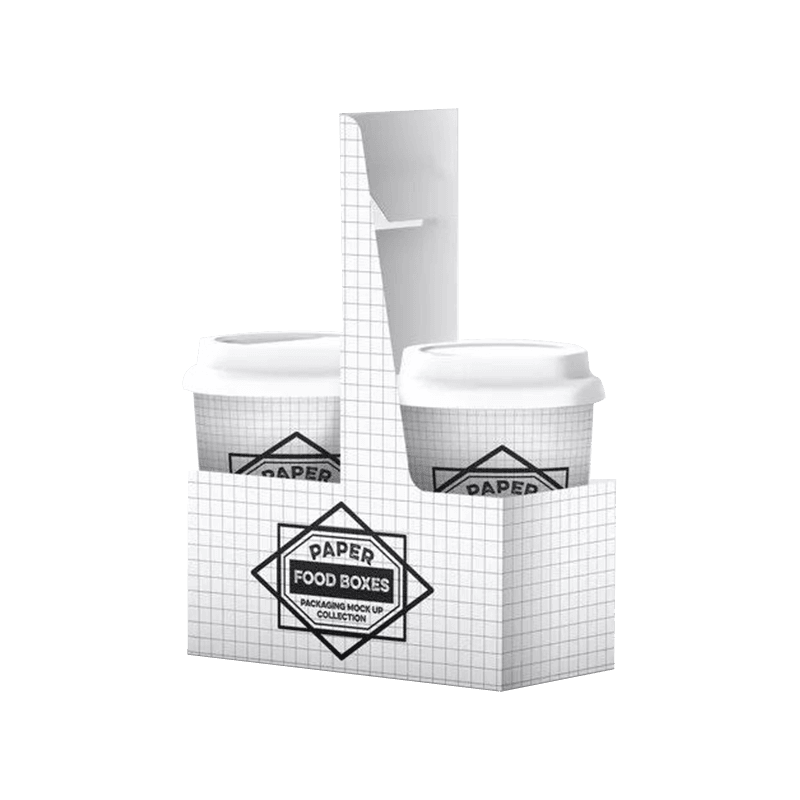 Corrugated Beverage Packaging Boxes with Custom PartitionsSturdy corrugated boxes with die-cut dividers for cans or bottles, supporting various case counts and stacking strength, with moisture-resistant and printing options for retail display.View Product →
Labeling Requirements: What Every Food Box Must Carry
Labeling rules are separate from material safety. Even if the board is compliant, an incomplete label can stop a shipment. The two main label zones are the Principal Display Panel and the Information Panel. The Principal Display Panel is the part most likely to be seen when the product is displayed. The Information Panel is the panel immediately to the right of the Principal Display Panel, unless the package is too small.
If the corrugated box is a secondary shipper and not the retail package, the food labeling rules generally apply to the packaged item inside. But if the box itself is the retail container, the full label applies. Food brands often ask for an outer corrugated shipper with only a product name and handling marks, which can be acceptable on a transport container.
Required statements
- Statement of identity: the common or descriptive name of the food in bold type.
- Net quantity of contents: the amount of product in both US customary and metric units, usually declared on the Principal Display Panel.
- Ingredient list: ingredients in descending order of predominance.
- Allergen declaration: major food allergens must be declared in plain language and in English on labels sold in the United States.
- Nutrition Facts: required for most packaged foods under standard serving sizes.
- Name and address: the manufacturer, packer, or distributor responsible for the food.
- Country of origin: a requirement often enforced by Customs as well as FDA for imported food.
Placement is a common packaging error. An ingredient list or allergen statement can be hidden under a corrugated flap, behind a bottom closure, or on a panel covered by a sleeve. If the food is packed in a corrugated carton that acts as the retail unit, the label layout must match the actual box assembly. The design team should review the full blank before large-scale printing.
 Custom Printed Corrugated Fruit Packaging Boxes with OptionsFruit boxes featuring die-cut windows or enclosed cartons, with partitioned inserts for delicate produce, and full-color printing for brand identity and seasonal appeal.View Product →
Material and Construction Decisions for Corrugated Food Packaging
Food safety in corrugated packaging starts with knowing which surfaces can touch the food. A normal shipper can use standard paperboard with plain ink, but a direct contact pizza box or a microwave-ready tray is different. The inner liner, corrugating adhesive, die-cut edges, and printed outer surface can all affect the final product.
Paper and paperboard components are generally addressed under 21 CFR 176.170 for aqueous and fatty foods and under 21 CFR 176.180 for dry foods. Starch-based adhesives are common and usually acceptable. Once you add a grease barrier, a water-resistant coating, a lamination film, or a specially formulated ink, that new component becomes the regulatory question.
Inks are a frequent weak point. For an outer printed surface, the ink may not need to meet food additive rules if migration is not expected. For a pizza box, where food touches the inner liner, suppliers should select low-migration inks and provide supporting data. PFAS-containing grease barriers are under pressure in many states. Avoid claiming PFAS-free unless the coating is truly free of per- and polyfluoroalkyl substances. The same caution applies to BPA in laminates and heavy metals in pigments.
For a deeper look at how to handle design details and avoid a preflight failure, see designing custom corrugated boxes for food packaging.
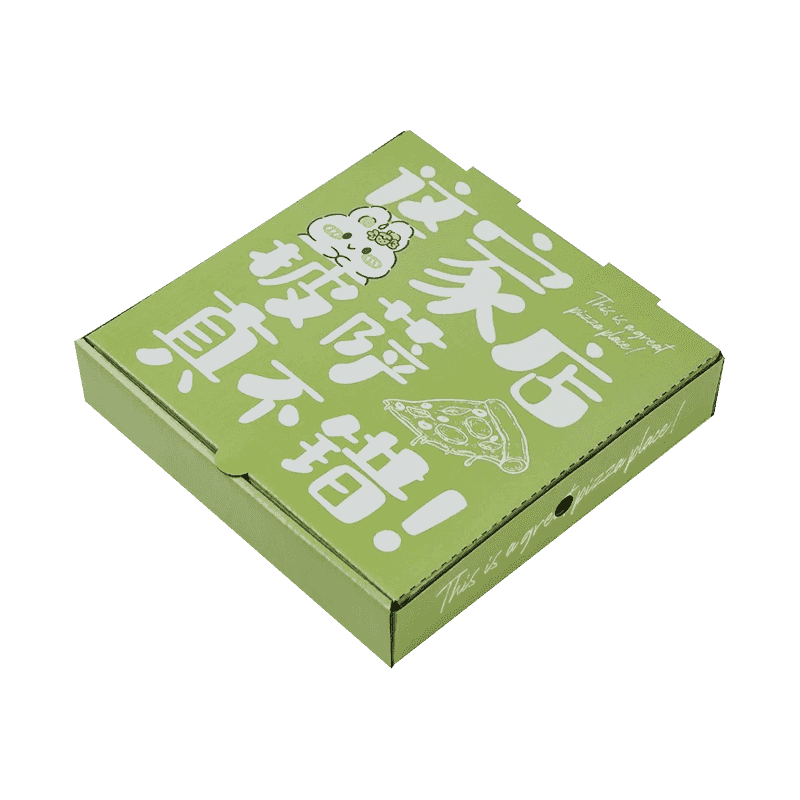 Custom Logo Corrugated Pizza Takeout BoxesFluted corrugated pizza boxes that maintain heat and resist steam, with full-color printing on kraft or white surfaces, customizable sizes for different pizza dimensions.View Product →
Buying Checklist for Food Brands and Importers
Because the manufacturer carries the responsibility for material compliance, a simple purchase order is not enough. Use this checklist before approving a corrugated food packaging supplier.
- Request a compliance statement for the final box. The statement should cover paper, board, adhesive, ink, and coating.
- Confirm the specific 21 CFR sections or FCN numbers. A vague "food grade" phrase is not a claim.
- Ask for migration data when the package holds fatty foods or direct contact products. This gives an indication of whether substances transfer to the food.
- Check destination and state requirements. Some US states have stricter rules for PFAS in packaging, and green claims must be truthful.
- Verify label artwork before printing. Confirm that the ingredient list, allergen statement, net weight, and responsible company are in the right place on the box blank.
- Keep a paper trail. For a buyer, the most important asset is a file of declarations, raw material specifications, and test reports from the supplier.
To understand why this matters from the material side, read about ensuring food safety and freshness with cardboard.
Final Word
FDA food packaging requirements are not an all-or-nothing approval system. The package itself is not certified. What the regulation demands is that the materials and substances that contact food are safe for that contact, and that the label is honest and complete.
For a corrugated box, the compliance margin comes from supplier data, appropriate material selection, and careful artwork review. When those three points are handled, food packaging in the United States becomes far less intimidating than it appears.

- Contact Us
- Phone:+86-138 1869 0662
- TEL:+86-573 8570 0965
- Email:[email protected]
[email protected] - Address:No. 269, Jinsui Road, Xincang Town, Jiaxing City, Zhejiang Province, China
- Get in Touch

