


 English
  русский
  Français
  Español
  عربى
عربى Shoe Box Design: Structure, Materials, Branding, and Cost Considerations
Aug 07, 2026
Content
A shoe box that reaches a customer with a crushed corner is a silent product failure. The sneaker inside may be unharmed, but the packaging has already shaped the buyer's impression of the brand and often triggers a return request. The opposite problem is just as common: a visually striking retail box that costs more than the margin of a mid-priced shoe can support.
Good shoe box design starts with the physical product, not with the artwork. The dimensions, board grade, flute profile, and closure system determine whether the box protects the shoe, ships efficiently, and fits the brand's budget. This article walks through each decision in order: structure first, then material, print, cost, and the practical brief that should go to a packaging manufacturer.
Start with the Shoe, Not the Brand
Before thinking about Pantone colors or foil stamping, put the actual shoe into the dimensions. Sizing an empty box from a generic size chart is how brands end up with a shoe that slides, bends, or arrives with a crushed heel counter. The internal length, width, and height should come from measuring the largest size in the product line, plus a decision about how the pair sits in the box: side by side, heel-to-toe, or stacked.
For a single pair of shoes in a conventional box, the internal dimensions fall into familiar ranges:
| Footwear category | Internal dimensions (L x W x H, mm) |
|---|---|
| Adult athletic shoes (US 7–12) | 330 x 210 x 120 |
| Adult dress shoes (US 7–12) | 330 x 190 x 110 |
| Kids' shoes (US 1–6) | 255 x 160 x 90 |
| Boots and high-tops | 365 x 240 x 140 |
Add 3–5 mm of clearance on each dimension as a starting point. Too little clearance makes the box press on the toe cap and heel counter; too much lets the pair shift during transit and rub against the printed surfaces. The right allowance depends on the shoe itself: leather boots tolerate a bit more space, while knit sneakers need a tighter cradle. The outer dimensions of the finished box then determine the cost of the blank, the size of the shipping carton, and how the product sits on a retail shelf. For a deeper look at measuring and calculating the correct blank size, refer to the carton size guide.
Two constructions dominate shoe box design. A one-piece folder is simple, cheap, and ideal for mail order. A two-piece lid-and-tray box feels more premium and holds its shape better on a shelf. In a two-piece box, the inner width of the lid should be the outer width of the tray plus about 0.7–1.0 mm per side; less than that sticks, more than that looks loose. The lid fit is the first detail a customer notices, so it is worth a sample round before mass production.
Choose the Corrugated Board and Flute for the Actual Delivery Route
Corrugated board is the default material for shoe boxes, and the flute profile inside the board needs to match the journey the box will take. E-flute, roughly 1.5 mm thick, offers the smoothest printing surface and is the usual choice for retail-oriented shoe boxes. B-flute, around 3 mm thick, adds more vertical compression and survives parcel sorting better. C-flute is thicker and rarely used for shoes. Export programs and heavy pallet stacking may justify EB or BC double-wall board, which adds strength at the cost of weight, thickness, and price.
ECT ratings and how to read them
Flute type alone does not determine strength. The Edge Crush Test (ECT) value, printed on the board supplier's certificate, measures the compression resistance of the corrugated board. For a single pair of shoes shipped by parcel, 32 ECT single-wall board is usually enough. If the box will sit deep in a warehouse stack or travel as part of an export pallet, choose 44 ECT or a double-wall construction. Instead of guessing, run a simple stacking test with filled boxes under the real stacking height and time frame.
Flute direction and liners
The direction of the corrugation changes how the box behaves. When the flutes run vertically inside the side panels, the box resists top-load compression much better. A sharp crease along the lid edge, however, is achieved by creasing across the flutes. Good structural design balances these two requirements. If you need a reference, the complete guide to corrugated board flute sizes explains how flute profiles compare. The outer liner also matters: white top liner shows colors faithfully but costs more, while a kraft liner gives a natural brown look that suits two-color, minimal designs.
Match the Visual Design to the Box Structure
A shoe box presents three surfaces the customer actually examines: the top face on the shelf, the side of the lid when lifted, and the inside base when the shoe is pulled out. The visual design should respect these surfaces instead of treating the box like a poster wrapped around six sides.
Choose the printing process for the run size
Water-based flexo is the workhorse of shoe box printing. It handles solid colors and simple patterns at high speed and becomes economical once the order passes a few thousand units. Offset-litho laminated labels deliver photographic detail and are common in premium retail packaging, though lamination adds both cost and lead time. Digital printing carries no plate charges and suits short runs, seasonal capsules, or personalized designs; the cost per box is higher, so use it for quantities below roughly 3,000 boxes.
Specify colors and finishes precisely
Footwear brands are color-sensitive. Specify brand colors as Pantone references, not as a screenshot or a printed sample that has already drifted. Ask for a physical proof and check it under lighting similar to a shoe store or an online-review photo. Finishes such as matte lamination, soft-touch coating, and spot UV change the tactile feel, but they also change the folded thickness and lid stiffness. Adjust the machine settings and the lid clearance before the production run begins.
Unboxing and interior details
The moments after the lid comes off are part of the brand experience. A thumb recess cut into the lid side lets the customer lift the lid without prying at the tray; a perforated tear strip on the top panel opens the box cleanly for e-commerce buyers. Inside, a paperboard tray or die-cut insert keeps the pair separated and prevents sliding during transit. A transparent window in the lid lets the customer see the shoe silhouette, but cutting a window removes structural strength from the panel, so keep the window within about 40% of the panel area or add a reinforcing frame. If the collection also includes apparel, bags, or small accessories, the same visual language can be printed across corrugated outfit and accessories packaging, which keeps the product line consistent and spreads the artwork cost across more SKUs.
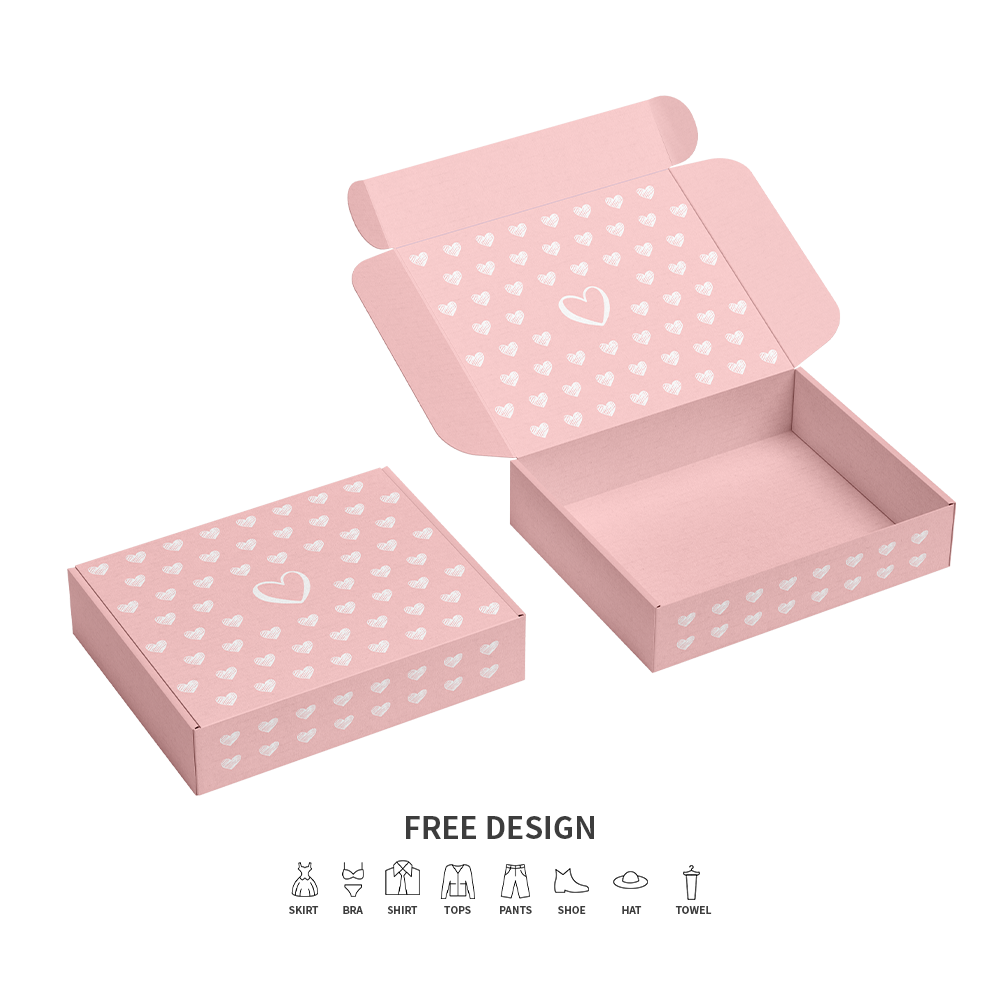 Corrugated Cardboard Outfit Items Packaging Boxes Manufacturers, Custom CompanyAs China Custom Printed Cardboard Outfit Items Packaging Boxes Manufacturers and Custom Corrugated Outfit Items Packaging Boxes Company, ...View Product →
Control Cost, Waste, and Lead Time from the First Brief
Five variables consume a shoe box budget. Discuss each one with the manufacturer before sampling, because changing them after tooling is expensive.
- Board and flute. Upgrading from 32 ECT single-wall to 44 ECT or double-wall board adds roughly 5–15% to board cost. Use the lighter grade unless the distribution route requires the stronger one.
- Printing coverage. A design that leaves natural kraft or unprinted areas uses less ink than full-bleed color. On long flexo runs the saving is small per box but adds up over a season.
- Finishes and lamination. Matte laminate and soft-touch coating add cents per box and a few days of lead time. E-commerce-only boxes rarely need them.
- Inserts and windows. Every extra die-cut part means an additional production step and more assembly labor. A standardized insert tray is more economical than a custom shape.
- Order size. Digital printing is usually cheapest below roughly 3,000 boxes; flexo with plates takes over at higher quantities, and runs above 10,000 boxes benefit from automated folder-gluers.
Sustainability should be part of the same brief. Recycled liner and medium are standard options and do not change the ECT rating if the board is correctly made. Water-based inks, reduced lamination, and a standard box footprint across several shoe models all cut waste. For a side-by-side view of how board materials affect stiffness, recycling, and cost, the cardboard vs paperboard comparison is a practical reference.
Shoe Box Design for Different Selling Channels
E-commerce and direct-to-consumer
For online orders, a shoe box spends most of its life inside a parcel network rather than on a shelf. The priorities are compression strength, secure closure, and clean unboxing. Many shoe brands now ship in one branded mailer-style box instead of putting a retail box inside a separate brown shipping carton. Custom corrugated mailer boxes are the standard choice for this strategy, because the brand is printed directly on the shipping box and no second carton is needed. This reduces weight, void fill, and packaging waste.
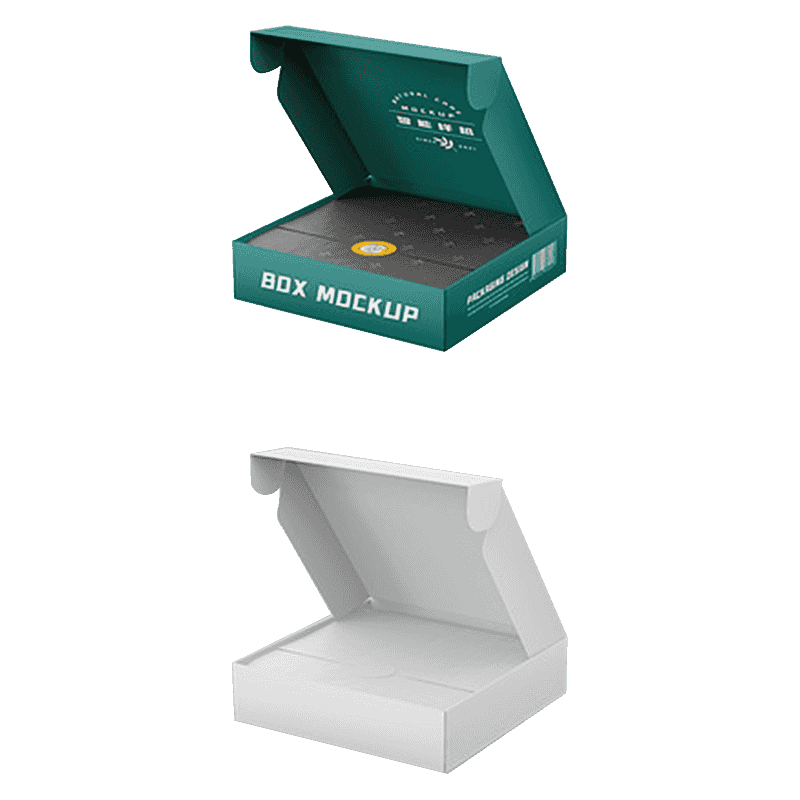 Custom Corrugated Mailer Boxes | Full-Color Branding, Factory DirectCustom corrugated mailer boxes with full-color printing and brand-specific sizing, made in-house in China. Design your unboxing — get a q...View Product →
Retail and boutique
Retail is the opposite case. The shoe box sits on a shelf and has to sell the product in seconds. E-flute gives the smoothest print surface, a two-piece lid-and-tray construction feels premium, and tight lid tolerances signal quality. For limited editions, collaborations, and seasonal capsules, a decorative corrugated gift box built from the same board and structure adds shelf appeal with printed patterns, colored liners, or a ribbon slot.
 Corrugated Cardboard Exquisite Gift Boxes Manufacturers, Custom CompanyAs China Custom Printed Cardboard Exquisite Gift Boxes Manufacturers and Custom Corrugated Exquisite Gift Boxes Company, Wenchen Packagin...View Product →
Wholesale, export, and private label
Private-label and export programs add pallet utilization to the design brief. Standardize two or three box sizes across the product line so filled boxes interlock on a pallet without wasted air. Keep the artwork simple, order in quantities that justify flexo plates, and confirm stacking strength with the manufacturer's test data before approval. These programs reward simplicity and consistency, not visual novelty.
A shoe box design succeeds when it protects the shoe, supports the brand, and stays within a cost the product can afford. The order of decisions matters as much as the samples. Fix the internal dimensions from the physical shoe, choose the board and flute for the real delivery route, settle the print and finishes for the moment of first touch, and only then lock the artwork. A beautiful box that fails in the warehouse is a failure; a cheap box that weakens the brand is another. Working through the sequence deliberately gives you a box that sells the shoe twice: once on the shelf and once at the moment of unboxing.

- Contact Us
- Phone:+86-138 1869 0662
- TEL:+86-573 8570 0965
- Email:[email protected]
[email protected] - Address:No. 269, Jinsui Road, Xincang Town, Jiaxing City, Zhejiang Province, China
- Get in Touch

